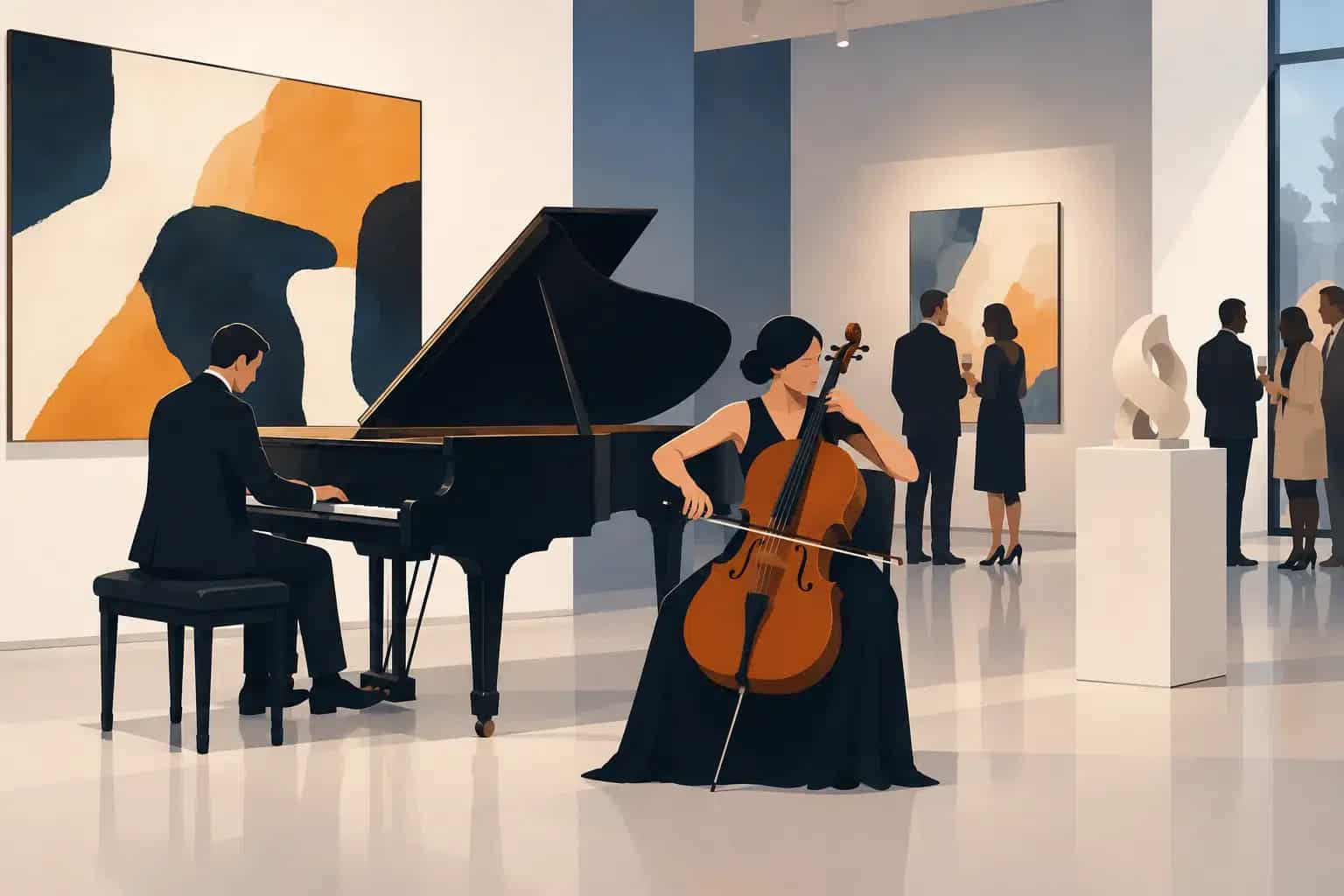
An exhibition opening begins as soon as guests enter the room and sense its atmosphere, before the welcome speech or the first glass of wine. Choosing music for an exhibition opening involves more than personal taste: it shapes the pace of the evening, the conversations and the way visitors experience the art.
The ideal accompaniment is present without competing with the works. It brings elegance, eases the transition from arrival to viewing and gives conversation a welcoming setting. Music can establish an atmosphere while leaving the exhibition at the centre of attention.
Which music suits an exhibition opening?
A photography exhibition in an urban gallery calls for a different sound from a sculpture show in a historic building or contemporary painting in a showroom. The art, venue, audience and schedule all help determine the programme.
A piano and cello duo is a refined choice for many exhibition openings. Its acoustic sound is expressive without overwhelming the room. The piano offers clarity and movement, while the cello adds warmth, depth and a singing quality. Together, they can accompany discreetly and give selected moments a distinctive musical focus.
Volume is an essential part of that balance. When guests can speak comfortably during the aperitif reception and still feel the music connecting the room, the result is an elegant, relaxed atmosphere.
Let the art set the tone
Music does not have to illustrate the artwork literally, but it can respond to its character. Poetic, colourful or figurative works often pair well with warm melodies, lyrical classical pieces or thoughtfully arranged film music. These choices support the sensory experience without dictating its meaning.
Abstract, minimalist or conceptual art may suit a more restrained musical language. Subtle jazz, selected contemporary classical works, bossa nova and elegant chillout arrangements can bring lightness and interest. An austere setting may call for a programme that avoids excessive drama or playfulness.
For photography, the visual language matters. Urban black-and-white series can work beautifully with jazz standards or sophisticated pop interpretations. Landscape and nature photography may benefit from calm, spacious music for cello and piano. Experimental art can suit a deliberately contemporary programme, provided the choices remain coherent.
The aim is not to comment on every image. A carefully selected repertoire creates a shared mood: refined, focused, open and appropriate to the exhibition.
Classical music, jazz or familiar melodies?
Classical music remains an excellent choice for exhibition openings. Bach, Mozart, Schubert, Fauré and Saint-Saëns offer moods ranging from contemplative to festive and lively. Clear, melodic pieces retain their expression as background music, whereas a demanding virtuoso programme may draw too much attention during a busy reception.
Jazz brings poise, urban character and warmth. Gentle swing, jazz ballads and French-inspired melodies suit galleries, design spaces and contemporary exhibitions. Sensitive interpretation and a carefully chosen programme keep the music connected to the event’s artistic character.
Familiar pop, rock and film melodies can also sound elegant in well-crafted arrangements for piano and cello. Recognition creates a connection with guests while the interpretation preserves the refined atmosphere. This combination is particularly appealing for a varied audience or an accessible, contemporary exhibition.
Bossa nova and chillout suit summer openings, rooftop terraces, hotels and light-filled rooms. Their relaxed pulse helps guests settle in and start conversations. The rhythmic intensity and volume still need careful control so the art retains its place at the centre of the evening.
Shape the music around the evening
An exhibition opening usually has several stages: arrivals, a welcome drink, a speech, perhaps a guided tour and then conversation. Music can connect these stages naturally.
A light, welcoming programme works well as guests arrive. Gentle classical music, jazz or bossa nova establishes a pleasant mood without asking visitors to become a concert audience. The opening should feel special while leaving space for those first encounters.
A selected piece before or after a speech can mark a transition and gently gather attention. Such an interlude does not need to be long: two or three minutes may be enough to focus the room and give the spoken words added weight.
Later, as conversation becomes livelier, the repertoire can gain colour and rhythmic energy. Even at an informal exhibition, the most effective music supports the social flow and remains attentive to the purpose of the evening.
Live music brings presence and connection
A playlist can provide an accompaniment, while live musicians can respond directly to the room. They adjust to conversation levels, schedule changes and the mood of the guests. An early speech can be accommodated with a graceful ending; late arrivals can be welcomed with an extended musical passage.
The visual presence also matters. A thoughtfully positioned piano and cello duo signals care from the moment guests arrive. The musicians become part of the setting without needing to dominate it. For galleries, brands, architectural practices and companies, this conveys attention to quality.
SwissDuo combines classical expertise with a repertoire spanning classical music, jazz, film themes and tasteful pop arrangements. Each programme is tailored to the exhibition, venue and audience.
Plan the space and practical details
Positioning affects the music’s impact. The ensemble should be visible without obstructing views of important artworks or speakers. An entrance area, a spacious alcove or a position near the reception can work well. Larger spaces may benefit from discreet amplification; smaller galleries often suit an acoustic performance.
Plan the duration realistically. An hour and a half to two hours may be enough for a compact reception. Longer events need breaks and musical variety to keep the accompaniment fresh. Setup time, lighting, power supplies and access for instruments should be discussed early.
Start with three questions
What impression should the exhibition leave? How formal or relaxed will the reception be? And when should music attract attention, rather than simply support the atmosphere?
You do not need musical terminology to answer. An experienced ensemble can translate ideas such as contemporary, warm, urban, evocative or festive into a coherent repertoire. A sensitive balance makes the music feel naturally at home in the exhibition, leaving guests with a lasting memory of its atmosphere.