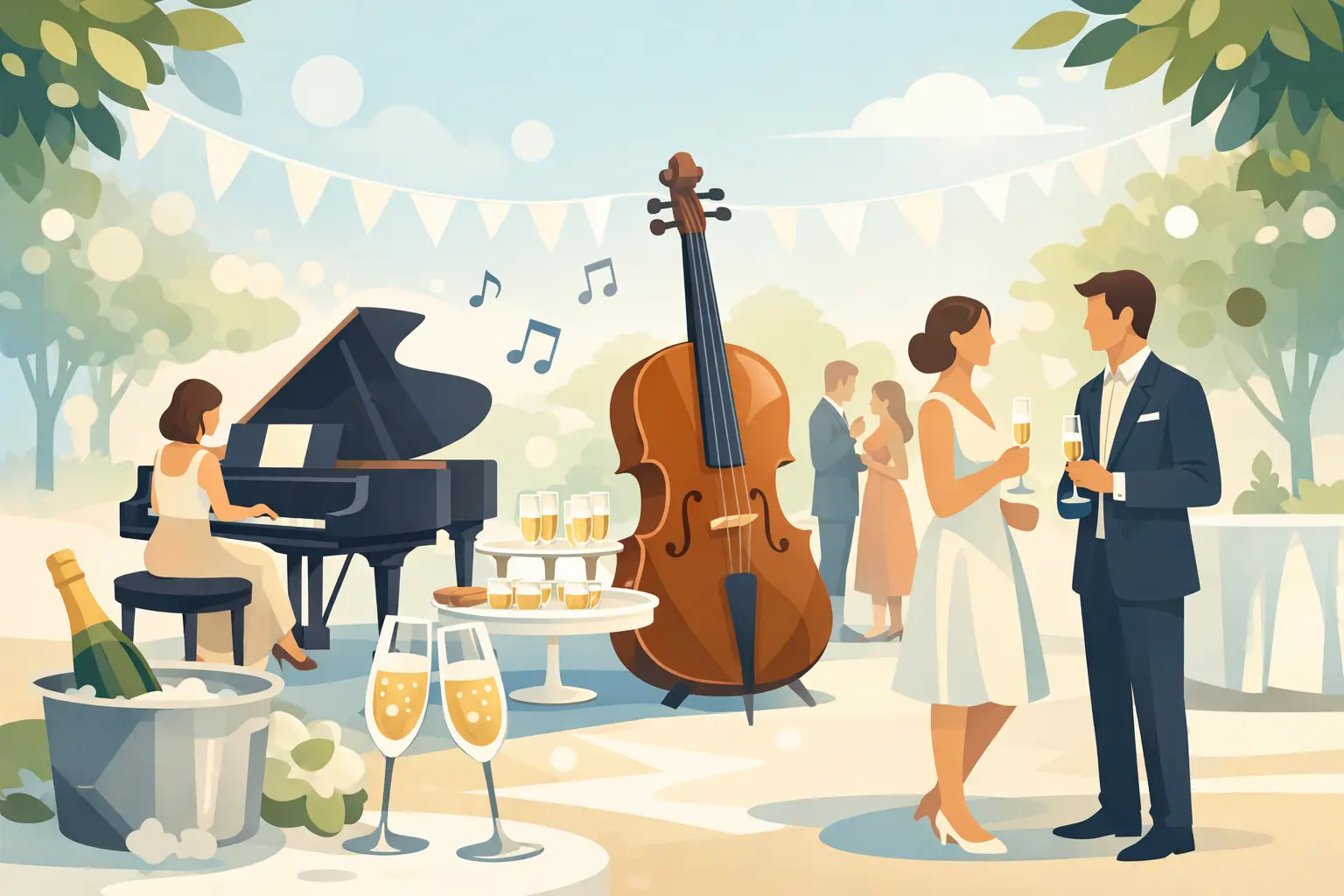
The first champagne is poured, the guests arrive, first hugs and congratulations fill the room. It is precisely at this moment that decides whether an aperitif is just a waiting time or the atmospheric start of a special day. Which music goes with the champagne reception? Music that creates elegance, allows conversations and yet has a distinctive atmosphere is the most beautiful.
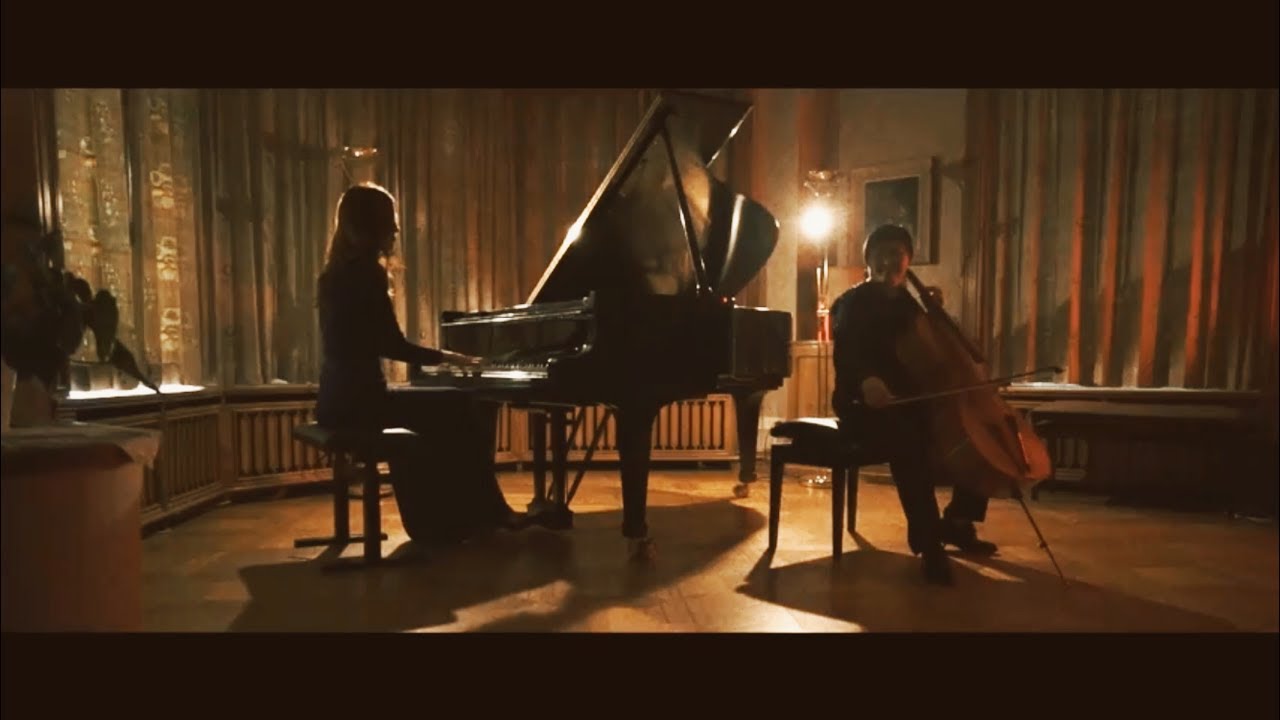
A champagne reception lives on lightness. The musical accompaniment can be present, but never fight for attention. Live music with piano and cello meets a particularly fine tone: it combines classic class with warmth, looks high-quality and can be integrated in a subtle and emotional way into the event.
Which music goes with the champagne reception? the right character
Melodies that sound open, charming and positive are suitable for the reception. They should welcome guests, not overwhelm them. A carefully chosen program creates more than pleasant background music: it gives the occasion a handwriting.
Classic works bring tranquility and timeless festivity to historic halls, hotels or elegant gardens. A minuet, an airy waltz or a well-known classical melody can refine the frame without a formal effect. Especially at a wedding after a church service or symbolic wedding ceremony, a beautiful transition from the ceremony to partying together is created.
At the same time, an aperitif does not have to sound exclusively classic. Instrumental Arrangements Known Pop Songs, soulful film music, bossa nova or subtle jazz appear approachable and stylish. When guests recognize a familiar melody, there is often a quiet, connecting moment. With piano and cello in particular, modern titles are gaining a noble, concertante color that goes far beyond a playlist.
The decisive factor is less the individual genre than the attitude of the program: tasteful, varied and curated according to the occasion.
Live music or playlist at the aperitif?
A playlist is practical, but it cannot react to a room. When the guests arrive cautiously at first, a different musical energy is needed than after the wedding, when the joy is noticeably in the room. Professional musicians read this dynamic and intuitively adjust the volume, pace and selection.
Live music also creates a visible form of hospitality. A piano and a cello are not just a source of sound, but part of the production. The guests perceive that this reception was designed with care. This works at a private wedding as well as at a vernissage, a company anniversary or an exclusive customer event.
The following applies: Live music does not have to be loud to have an effect. An acoustic duo in particular can elegantly accompany in smaller rooms or with an aperitif in the inner courtyard. For larger societies, spacious locations or a reception with a stronger gala character, the cast can be extended to a trio or quartet. In this way, the sound remains balanced and present in relation to the number of guests.
Vote for the repertoire on occasion and guests
A good aperitif program Does not consist of any episode of any favorite song. It comes from the interplay of occasion, place, guests and time of day. During a summer wedding in the garden, the music can be brighter, more lively and more Mediterranean. Bossa Nova, French chansons in instrumental form or gentle jazz blend wonderfully into the relaxed atmosphere.
Fit for an elegant evening reception in a Grand Hotel Classical melodies, film music and selected pop ballads particularly good. They underline the value of the room and still leave enough lightness for conversations. At a corporate event, the program can be more modern and clear: well-known songs with subtle jazz elements, stylish lounge sounds or iconic titles that appeal to international guests directly.
The personality of the hosts and hosts can also be heard. A couple who got to know each other on a movie soundtrack can incorporate this music as a recurring common thread. At a family party, a favorite song by parents or grandparents in an elegant arrangement can provide a touching surprise. Such personal accents are particularly strong if they do not dominate the whole reception, but are set precisely.
Well-known melodies give closeness, instrumental music gives space
Many hosts are wondering whether the guests should primarily hear well-known pieces. The answer is: both, but with measure. Recognizable titles create familiarity, but too many hits in a row make the reception look like a background playlist quickly.
Instrumental music opens up more space. Guests can talk without texts or strong choruses attracting attention. Piano and cello make even modern songs more subtle and harmoniously add them to a solemn setting. This balance of well-known melodies and artistic restraint is usually ideal for a champagne reception.
Volume: The often underestimated detail
When it comes to aperitifs, the focus is on encounters. Guests want to congratulate, toast, meet friends and have new conversations. If the music is too loud, it becomes a hurdle despite the best quality. If it is too quiet, the room loses warmth and the musical presence is lost in voices and jars of glasses.
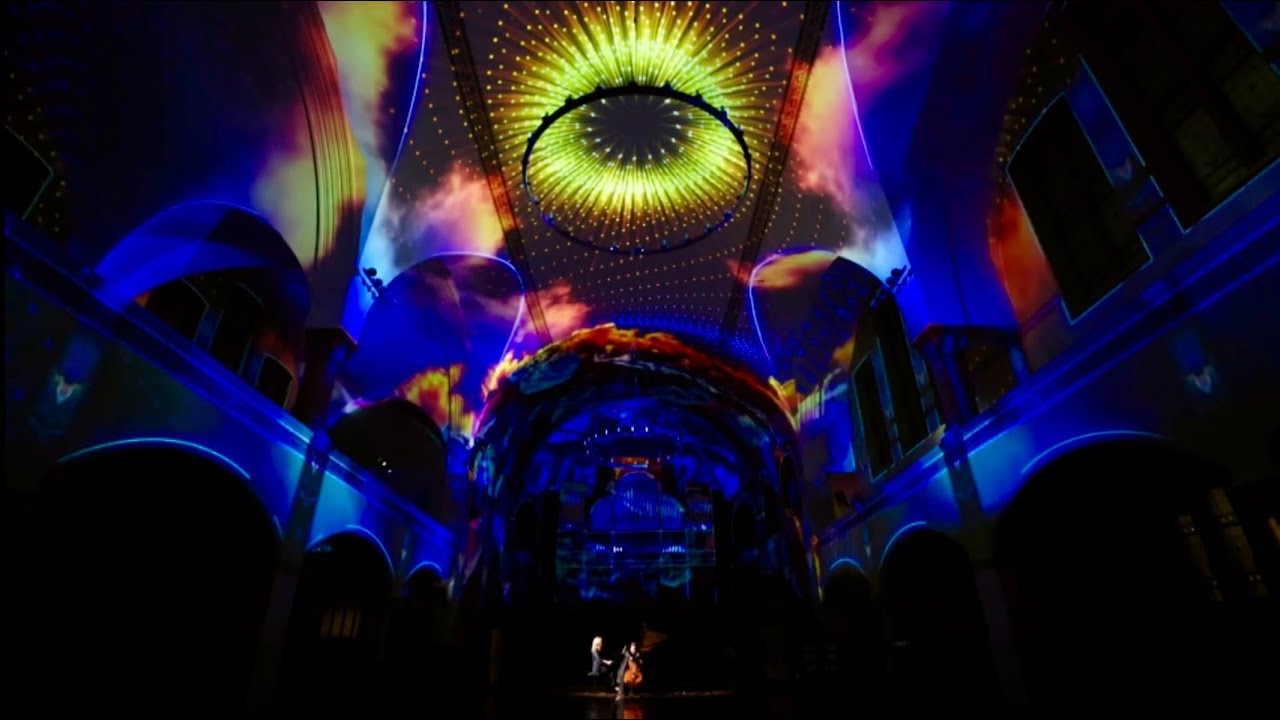
The right volume depends on the location. In a room with stone floors, high ceilings and many glass surfaces, the sound is much stronger than in a garden or marquee. The number of guests also plays a role: the more people talk, the more sonic presence the ensemble needs. Professional live music takes these conditions into account when planning and responds flexibly during the event.
Another factor is the location. Musicians should be visible without blocking a passage or being separated from the service. Ideal is a place from which the sound reaches the room and guests can experience the ensemble as part of the reception. Outside, a protected location, short distances and a reliable weather situation are just as important as a suitable power supply if a digital piano is used.
How long should the music play for the champagne reception?
Most aperitifs last between 60 and 120 minutes. A continuous, varied support is particularly effective for this time. It carries the arrival, the congratulations and the first conversations, without an interruption tearing up the mood.
At a wedding, the music often begins immediately after the ceremony and accompanies the reception to the group photo or the transition to the dinner area. At company events, she can already start when the guests arrive and later discreetly hide the opening word. If a program item is planned, such as a speech, a first toast or a surprise, the musical dramaturgy can be coordinated with it.
It is important not to want to fill every minute with a climax. A champagne reception is just gaining through his relaxed movement. The music can absorb this flow: inviting at the beginning, during the liveliest conversations a little more lively and calmer and more focused before the next program item.
A musical reception that will be remembered
The most beautiful music for the champagne reception is the one that feels like it belongs to this place, this people and this occasion. It gives the first offense shine, keeps the necessary space free and transforms an arrival into a real reception.
With a first-class live program from Swissduo Pianocello, this first lesson turns into a stylish, emotional start. Therefore, not only choose pieces that you like, but also music that welcomes your guests and sets the tone for everything that is celebrated afterwards.