At a wedding in the garden, the first cello tone should be audible at the crucial moment. With an aperitif in a high hotel hall, the piano must not lose itself in the room. This is exactly where the question arises: What technique does live music needso that it can unfold its emotional effect without dominating the occasion with cables, loudspeakers or an inappropriate sound image?
The good news for hosts: professional live music does not automatically need great technical production. Rather, the right assessment of the room, number of guests, instrumentation and process as well as discreet, expert implementation are decisive. for a duo out piano and cello other requirements apply than for a band with drums and vocals. And an intimate ceremony demands something other than a company reception with 300 guests.
What technique does live music need on an occasion?
The right technique is never based on the number of guests alone. The acoustics of the place, the desired volume and the role of the music are also decisive. If the music is to accompany a festive entry, it needs primarily presence and clarity. should she have one lively aperitif Or wear a gala, she must be able to lift herself smoothly over conversations and room noises without becoming intrusive.
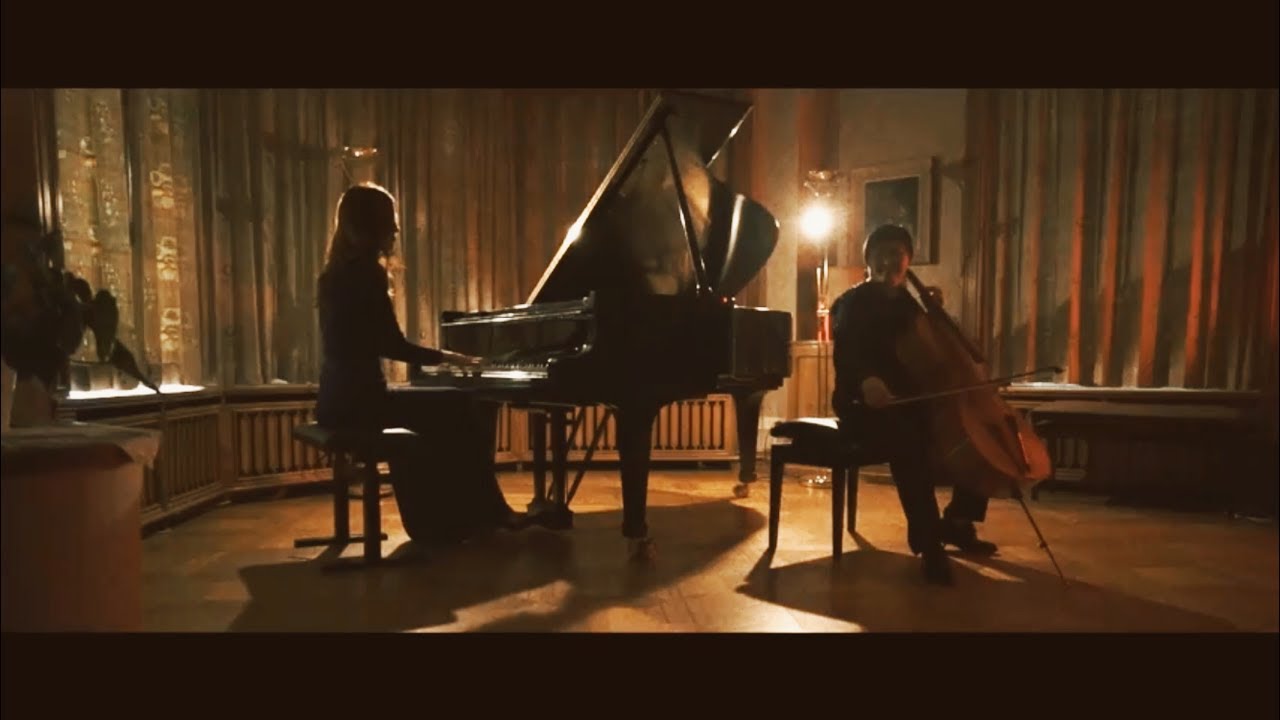
In small, quiet rooms, an acoustic cello can often sound unamplified. With a real wing, this is also possible if the company is manageable and the instrument can be placed well in the room. In a church, a historic hall or a villa, natural acoustics can even be part of the special magic.
As soon as the distance between musicians and guests grows, many people speak at the same time or the event takes place outside, a subtle reinforcement usually makes sense. She doesn’t make the music louder for her own sake. It ensures that the fine lines of a cello, the depth of the piano and the dynamics of an arrangement remain understandable everywhere.
Piano: Acoustic, digital or via the system?
The first technical question usually concerns the piano. If the location has a well-groomed grand piano or a high-quality piano, it can be ideal for a classic and particularly authentic timbre. Assuming it’s tuned and playable. A detuned instrument also affects the best performance – so this point should be clarified at an early stage.
However, many event locations do not provide a suitable acoustic instrument. Then a professional digital stage piano is the elegant solution. It offers a differentiated, warm sound, takes up little space and can be precisely adjusted to the situation in terms of volume. With a high-quality, compact sound system, the sound is full and natural, without the technical equipment coming to the fore visually.
A digital piano needs electricity and a protected, level location. A solid ground is added outdoors. Gravel, lawn or uneven terraces are not generally excluded, but must be prepared in such a way that the instrument, pedals and seat are stable. Direct sun, rain and strong humidity are just as unsuitable for electronic instruments as for many acoustic instruments.
The cello: preserve naturalness, gain reach
The cello is an expressive, but comparatively sensitive instrument in the open space. In a quiet chapel or at a small civilian wedding, it wears acoustically wonderfully. In wind, traffic noise, large companies or a spacious terrace, however, its sound can quickly lose its presence.
A professional acceptance with an inconspicuous microphone or pickup preserves the character of the instrument and gives it the necessary range. It’s not just the volume that counts. A good sound captures the warmth of the deep registers, lets high melodies shine and avoids annoying feedback. Especially with emotional songs, film music or modern pop arrangements, this sound quality makes an audible difference.
The sound system: small in the picture, big in effect
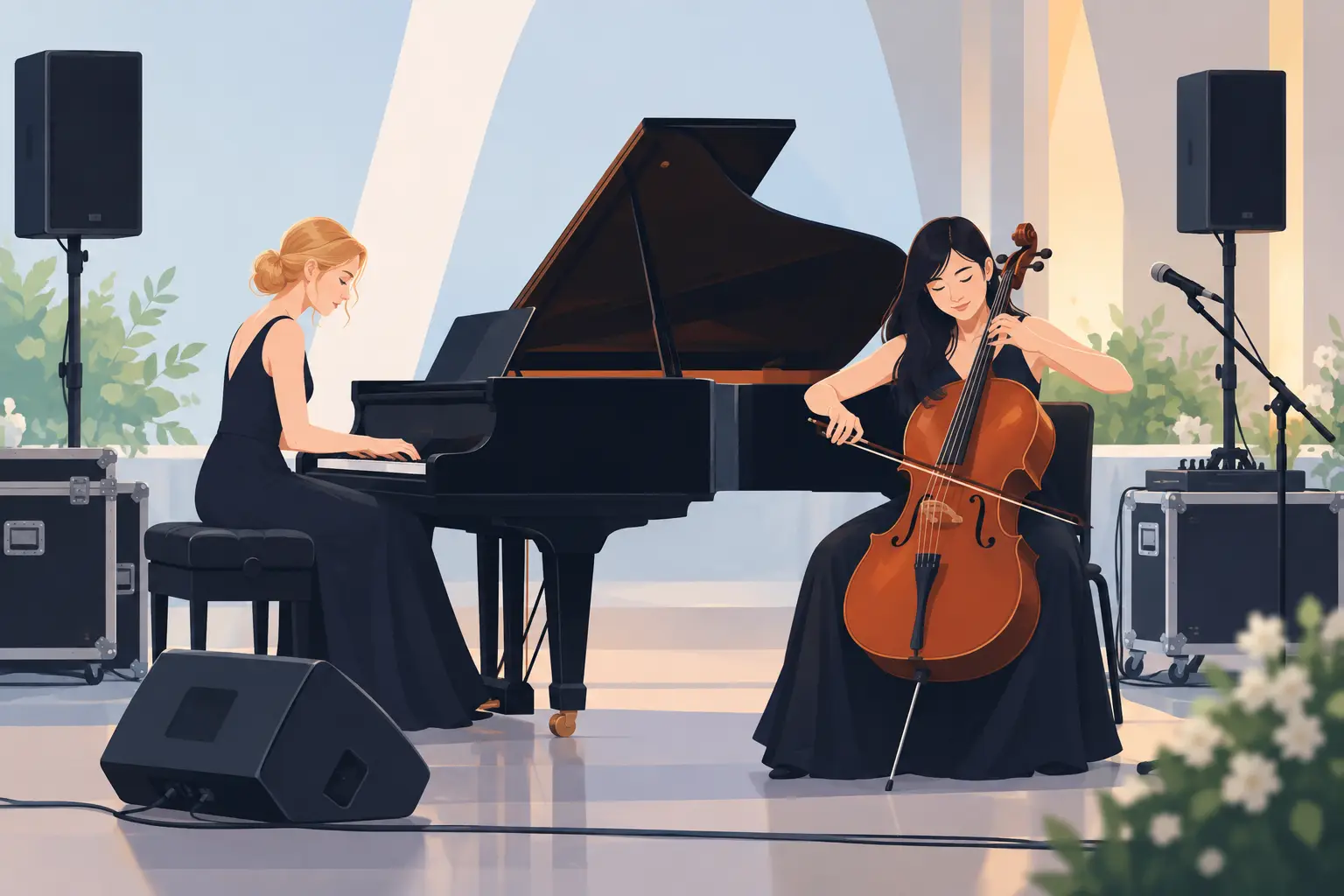
In many cases, a discreet system with two high-quality loudspeakers, a small mixer and the right cabling is sufficient for a piano cello duo. This system should not stand directly in front of the guests or block valuable visual axes. Experienced musicians choose the position so that sound, aesthetics and freedom of movement go together.
At a ceremony, a compact solution is often enough close to the musicians. With a long aperitif in several areas, it can make sense to plan the sonication differently. This is not about filling every corner with music. Rather, a pleasant musical atmosphere should be created that allows conversations and still creates a noticeable setting.
For gala evenings, award ceremonies or larger corporate events, the sound system often plays a second role: it combines musical contributions with speeches, moderation and recordings. Then a clear overall technical planning with the location or event technology is worthwhile. Music, microphones for speeches and the process should be coordinated early on.
Electricity, space and build time
The technical basis is simple, but indispensable: an easily accessible power connection near the stage, enough space for instruments and a realistic set-up time. Ideally, the area is ready before the guests arrive. In this way, the technology can be set up discreetly and the sound can be checked before it starts.
A normal socket is usually sufficient for a duo. Outside, it should be protected from the weather and not have to be reached via long, unsecured cable routes. Cables are laid cleanly and protected where guests or service staff pass by. This seems natural, but prevents unnecessary interruptions and preserves the elegant appearance of the occasion.
Light can also become relevant. At an evening ceremony in the garden or a dinner after sunset, musicians need enough light for notes and instruments. This light should be warm and targeted. Flashing light quickly takes its effect on a solemn scenery, while too little light makes the concentrated performance more difficult.
Inside and outside: the acoustics decide
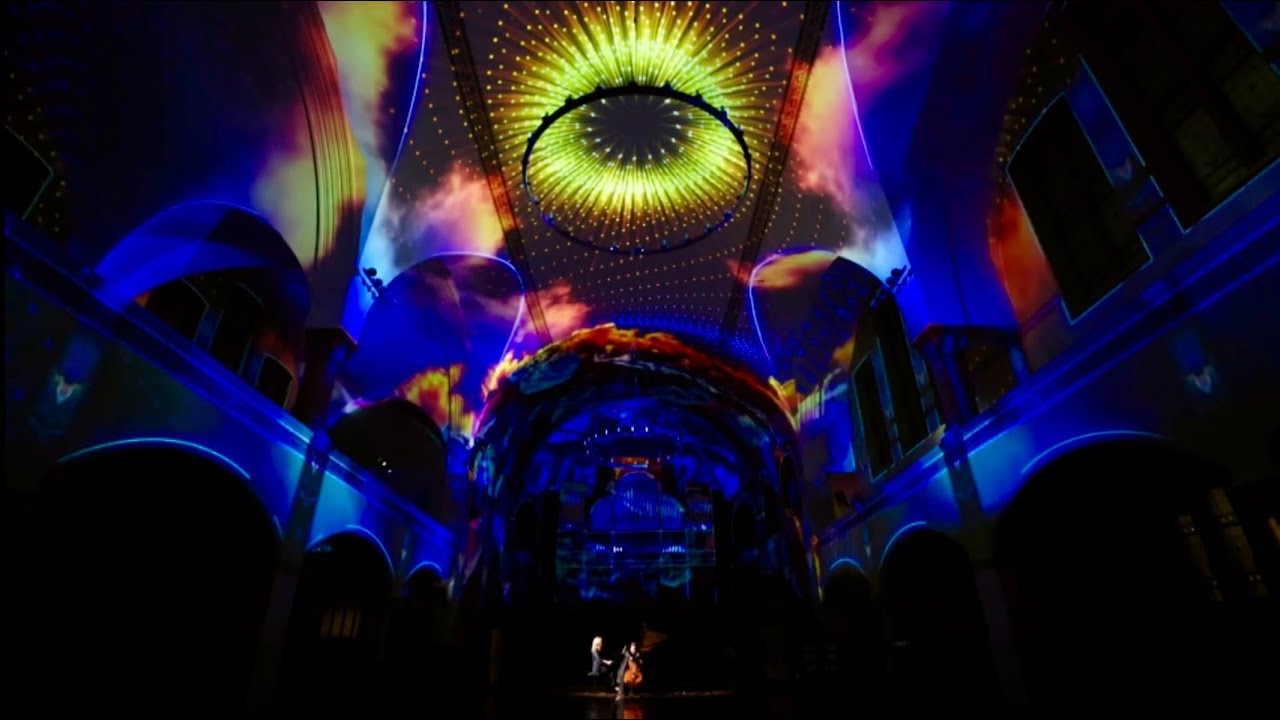
Interiors bring their own tonal language. High ceilings, glass fronts, stone floors and empty halls often create a lot of reverberation. This can have a magnificent effect on classical music, but also blurs fast passages or language. Carpets, curtains, guests and furniture change the acoustics greatly. A sound check just before the start is therefore more valuable than any general assessment in advance.
Outside, the challenge is the other way around: the sound loses itself more easily, and wind or ambient noise cannot be planned. A protected location under one roof, tent or a stable canopy is highly recommended for musicians and technology. A plan B is also important in the rain. A beautiful view does not replace a dry, safe place for valuable instruments.
At summer weddings, the music is often used in several places: for a ceremony in the garden, later at the aperitif on the terrace and possibly for a dinner in the hall. Whether a change of location makes sense depends on the time window, paths and structure. Sometimes it’s more stylish to let the music ring out in a central place instead of moving between program items with great effort.
What you should say in advance to music planning
The more precisely the general conditions are known, the more inconspicuous the technology works on the day of the event. Information on the number of guests, the exact venue, the indoor or outdoor area, available power connections and the timing are particularly helpful. Photos or a floor plan help to assess possible installation locations.
Also let us know whether speeches via a microphone are planned, whether there is already a house system and what mood you would like. Background music at reception needs a different sound level than a concert program item. At a symbolic wedding ceremony, the music should clearly support the processional, key rituals and the recessional.
A high-quality ensemble does not plan these details as a side issue, but as part of the artistic achievement. At Swissduo Pianocello, the repertoire, cast and technical requirements are tailored to the occasion – from the intimate moment for two to the representative celebration with an extended ensemble.
Less technique, better sound
The best event technology remains in the background. She lets a cello touch immediately, gives the piano depth and creates that calm, self-evident nature that distinguishes demanding occasions. Too large loudspeakers, an overdriven sound or visibly improvised cables distract from this. Too little technology, on the other hand, can lead to the music going under when it should fill the room.
That’s why the crucial question is not how much live music needs live music. The decisive factor is which technical solution does justice to the place, the guests and the musical moment. When sound and atmosphere are carefully planned, in the end it is not the plant that will be remembered, but the melody, which made a special moment unmistakable.