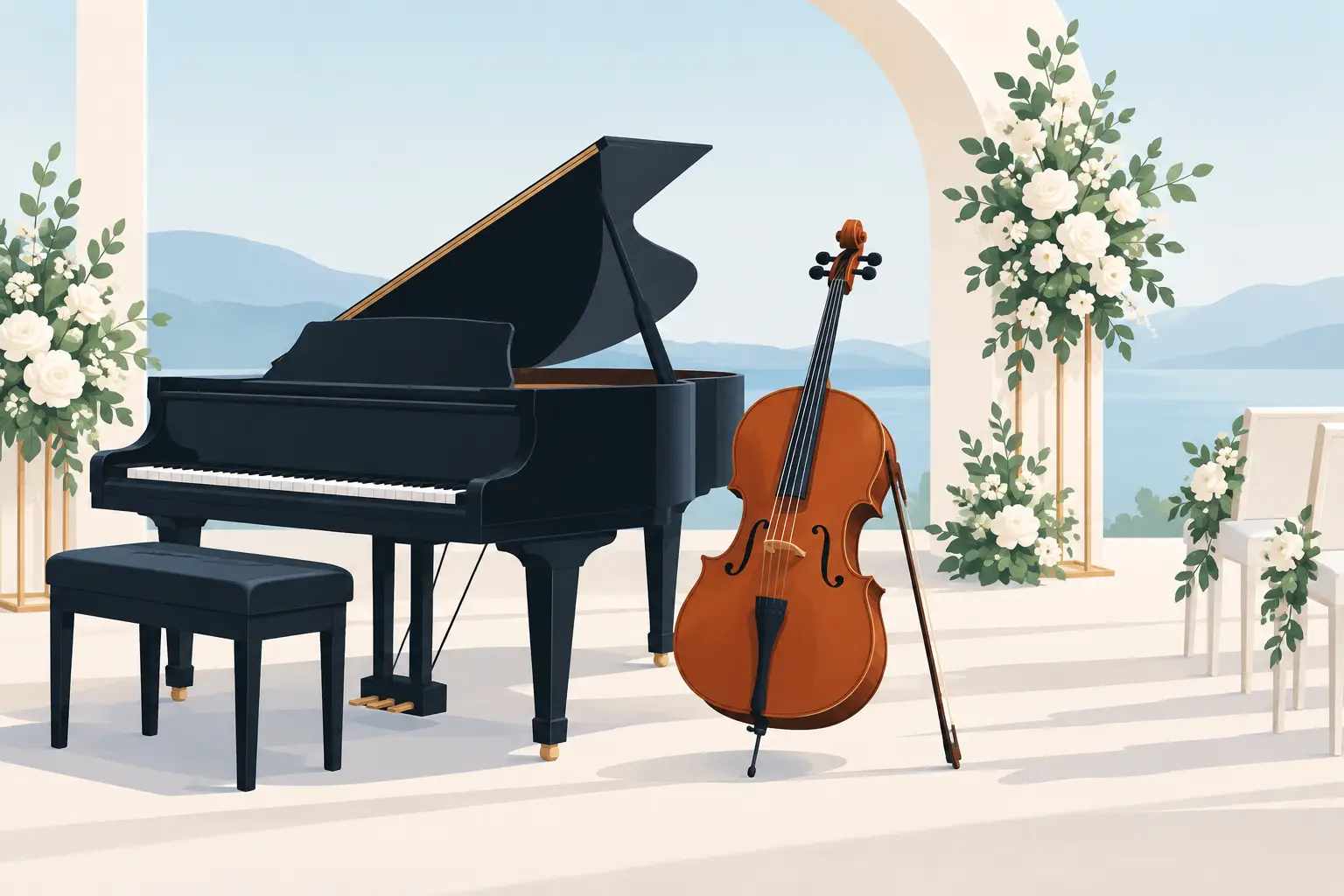
The first notes at an entrance can change the atmosphere instantly. Conversations settle and a formal occasion becomes personal. A thoughtful ceremony repertoire helps create this effect with music that reflects the people, place and significance of the event.
For weddings, christenings, memorials and formal corporate occasions, the selection can feel emotional and unfamiliar. Professional guidance connects favourite pieces with the schedule, acoustics and desired mood.
Let the occasion guide the repertoire
A piece that feels light at a reception may be too understated for an entrance. A dramatic work may overwhelm a small chapel. Begin with the feeling you want the ceremony to leave.
Weddings often combine celebration and personal meaning. Classical music brings timeless ceremony; a pop arrangement can tell a couple’s story. At a christening, music may feel warm and hopeful. At a funeral or memorial service, it supports remembrance and silence while leaving room for the family’s words.
A gala or corporate reception has another purpose: music welcomes guests and supports conversation. Piano and cello offer presence in both grand halls and intimate rooms.
The key musical moments
A ceremony is a sequence of arrivals, transitions, highlights and pauses. Planning these together creates a musical thread rather than a set of disconnected performances.
Arrival and welcome
Before the formal start, gentle classical miniatures, bossa nova, jazz ballads or film music can help guests settle. Moderate or calm tempos leave room for conversation. Strong contrasts and singalong favourites may be distracting at this stage.
Entrance and opening
Baroque music, romantic melodies and a meaningful contemporary song can all give an entrance its character. Match the tempo and duration to the walk. A longer entrance needs enough musical development; a short route may suit an excerpt.
Classical and contemporary pieces can sit comfortably together when their interpretation shares a ceremonial, clear and sensitive approach.
Rituals, readings and signing
Music may follow a reading, accompany a symbolic gesture or support the signing of a register. Instrumental pieces often work well because they leave space for words and reflection.
A complete work is not always necessary. Musicians can adjust repeats and endings to suit the actual duration of a ritual, maintaining a natural transition.
Recessional and congratulations
After the central moment of a wedding or joyful celebration, the repertoire can become brighter. A lively classical piece, a jazz standard or an optimistic pop arrangement can lead into congratulations and the reception. For a farewell ceremony, choose the closing mood with the family’s wishes in mind.
Combining classical music, pop and film themes
The quality of an arrangement matters more than its genre. Piano and cello can reveal depth in a familiar melody while preserving what makes it recognisable.
Baroque, Classical and Romantic works suit formal and sacred settings. Their range of expression offers many possibilities for a church wedding or traditional ceremony.
Pop and rock can express personal history: a journey, a concert or the beginning of a relationship. A sensitive instrumental arrangement makes that connection part of the ceremony. Strong rhythmic originals may need adaptation for quiet moments.
Film music can evoke images and emotion immediately. Some themes have an expansive dramatic shape, so listen carefully to whether they suit the space and intended moment.
Consider the room and the ensemble
A small chapel often rewards clear, quiet playing. A hotel ballroom or historic villa may suit a richer ensemble. Piano and cello balance warmth and presence; a trio or quartet can broaden the sound when needed.
High ceilings, reflective surfaces and conversation affect clarity. Outdoor events add wind, weather and access considerations. Repertoire, positioning and any discreet amplification should be planned together.
SwissDuo shapes each programme around the schedule, venue, guest numbers and desired effect, keeping it personal while attending to practical details.
Choosing without musical expertise
You do not need to read music. Describe the atmosphere, identify one to three meaningful pieces and decide which moments should give music particular prominence.
Also explain what you would prefer to avoid: perhaps an overly religious, sentimental or concert-like mood. Such guidance is as useful as specific song requests.
Leave room for flexibility. Live music can respond when an entrance takes longer, a ritual becomes especially emotional or guests need a little more time.
Choose melodies that feel like you and respect the occasion. Their value lies in the memory they help create.