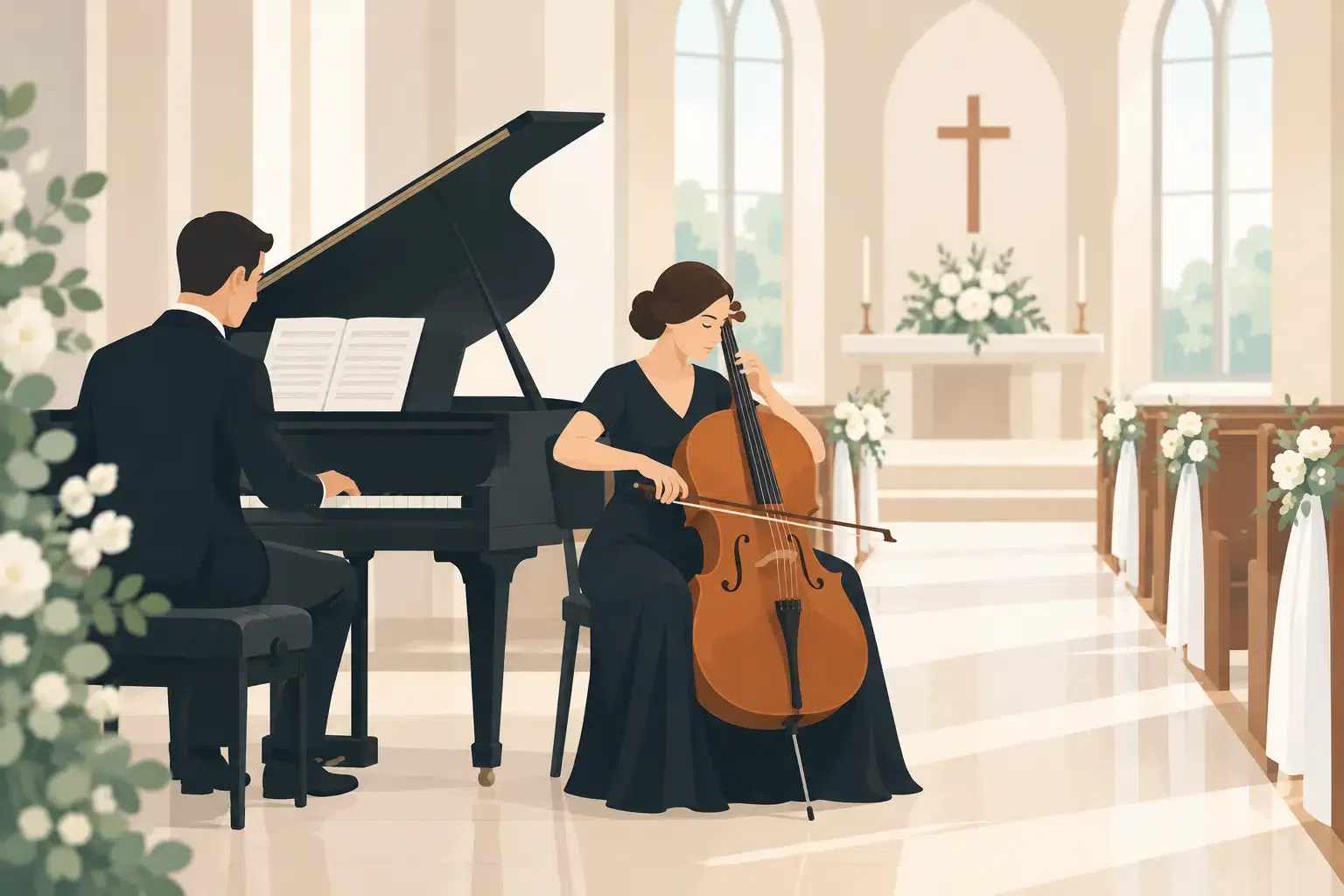
When the church doors open and the first notes sound, anticipation becomes a shared, ceremonial moment. Choosing music for a church wedding means finding pieces that give the entrance dignity, support the vows and bring joy to the recessional.
Live music responds to the church’s acoustics. The cello offers warmth and depth; the piano gives melodic clarity and harmonic support. A coherent programme matters more than the number of pieces.
Plan the ceremony before choosing the songs
Religious weddings have a liturgical structure, but the music can still be personal. Discuss the points that may include music: the entrance, interludes, signing where applicable, a reflective moment after the vows, Communion where part of the service, and the recessional.
The entrance needs musical presence rather than sheer volume. A classical work or an instrumental film or pop melody can both be effective when approved for the service. Tempo, length and character should fit the walk through the church.
During the ceremony, music should leave room for words. An interlude for piano and cello can connect two sections and allow a reading to resonate. The recessional can be brighter, more joyful and forward-looking.
Agree the programme with the church
Requirements differ between churches and officiants. Some prefer sacred or classical music; others accept secular pieces that suit the service. Lyrics and the associations of a song may also matter.
Ask whether an organ is available, whether visiting musicians may perform, where music is planned and whether a rehearsal is possible. Resonant church acoustics require care with tempo and volume.
An experienced ensemble can help coordinate these details with the officiant, reducing the organisational burden and respecting both your wishes and the setting.
Classical music, pop or film themes?
Classical music has a natural place in many churches. Pachelbel’s Canon and works by Bach, Handel or Schubert can provide a festive, timeless atmosphere.
A song connected to your own story can make the ceremony personal. A restrained pop ballad, film theme or jazz standard may sound elegant on piano and cello. An instrumental arrangement highlights the melody, although the church should still approve the selection.
A classical entrance and a personal melody later in the service can complement each other. The aim is a coherent programme with thoughtful transitions.
Listen to the arrangement, not just the title
A familiar song is not automatically suitable. Its associations, emotional intensity and arrangement need to fit the ceremony. A very rhythmic original may need a gentler interpretation.
Listen to the actual performance: does it feel too dramatic, melancholy or playful for the moment, or does it convey the tenderness and hope you want? This is more useful than relying on a generic wedding list.
How the ensemble shapes the atmosphere
An organ offers a traditional, expansive sound. A string quartet brings richness and ceremony. A piano and cello duo combines clarity with a warm, singing voice, allowing both intimacy and presence.
A small chapel may suit fewer instruments. A larger church or a more extensive programme may benefit from a trio or quartet. Choose according to the acoustics and desired effect.
Consider the transition to the aperitif reception. If the musicians continue afterwards, their programme can connect the ceremony with the celebration. Jazz, bossa nova, film music and pop arrangements can introduce a lighter mood.
Making decisions without feeling overwhelmed
Instead of starting with thirty favourite songs, choose three words for the atmosphere: perhaps ceremonial, warm and contemporary, or classical, intimate and joyful. Use them to guide the selection.
Choose one musical highlight with special meaning, such as the entrance or a piece after the vows. Let the other works support it. Keep an alternative available if a piece is not approved or proves too long for the service.
SwissDuo develops a coordinated programme from these wishes, combining classical ceremony music with personal arrangements of pop, jazz, rock and film themes. The music supports your moment with care.
Details that make the difference
Agree the exact cue for the first note. Will music accompany guests taking their seats or begin when the doors open? How long is the entrance? Can the music be extended if needed?
Match the volume to the church. Acoustic live music can often fill the space naturally while leaving room for prayer, speech and silence. Any amplification should be discreet and carefully adjusted.
Allow flexibility. You may walk more slowly than expected, a moment of emotion may last longer, or applause may change the timing. Experienced musicians adapt so these moments remain part of the ceremony.
The right programme sounds beautiful and feels personal. It gives your promises a musical memory that lasts beyond the day.