When the doors open for a gala evening, the first few minutes determine whether guests feel they are entering an ordinary reception or a truly special occasion. Thoughtful music direction for galas creates this atmosphere not through volume, but through presence, timing and musical distinction. It gives the room character, accompanies encounters with elegance and makes important moments in the programme feel more significant.
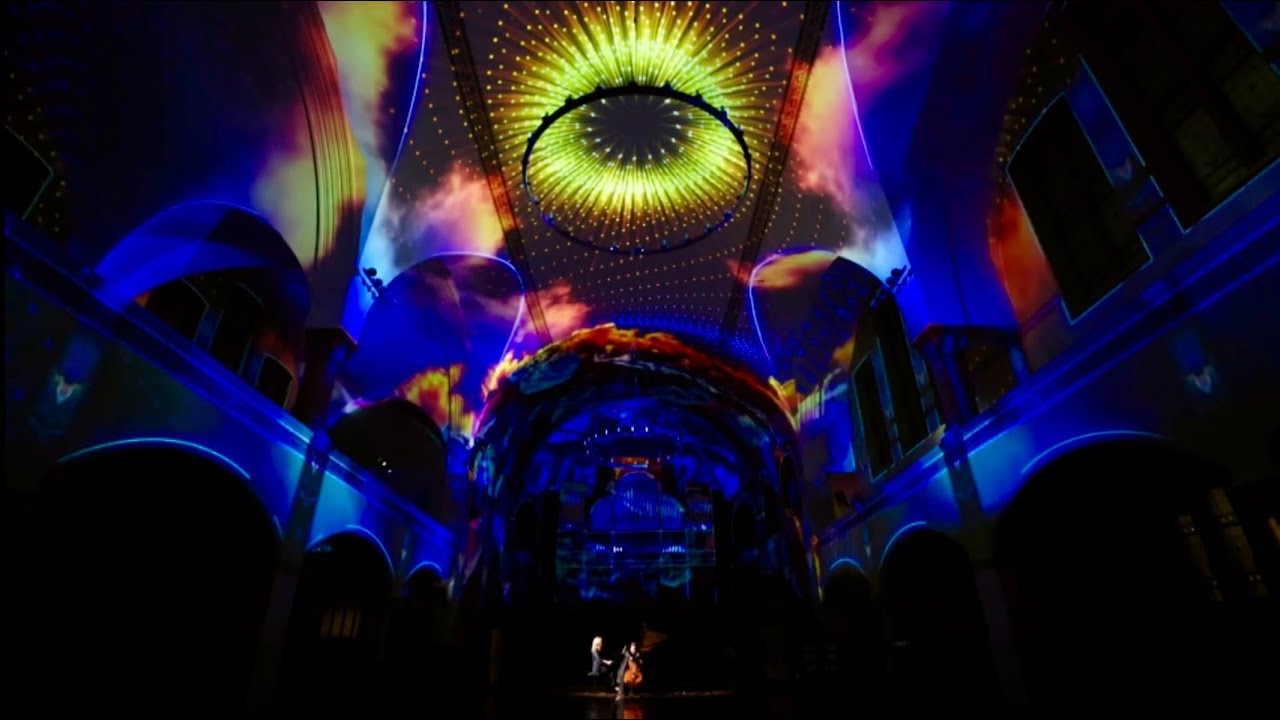
Especially at company anniversaries, award ceremonies, charity dinners or exclusive client events, music is far more than a pleasant addition. It connects architecture, lighting, programme flow and audience into one coherent experience. Piano and cello can sound representative, sensitive and surprisingly modern at the same time — provided the repertoire and musical use are tailored to the occasion.
Music direction for galas begins with the occasion
Every gala has its own rhythm. As guests arrive, the focus is on open, cultivated interaction. During dinner, music should create atmosphere without overpowering conversation. At a welcome, an award presentation or the appearance of company leadership, however, it can intensify the moment and focus attention.
That is why musical planning does not begin with individual song requests, but with three questions: What feeling should the evening create? Who will be in the room? And at which points should the music consciously move into the foreground? An international audience often responds wonderfully to familiar melodies from film, pop or jazz when they are arranged with style. For a long-established foundation or a formal banquet, a more classically shaped sound may carry the setting more convincingly.
The aim is not to fill a gala with continuous sound. The strongest effect often comes from alternating musical presence with deliberately placed silence. A finely played cello during the aperitif creates a different effect from a distinctive musical opening before an award. Both can be first-class when they are given the right place in the programme.
The reception: style from the very first glass
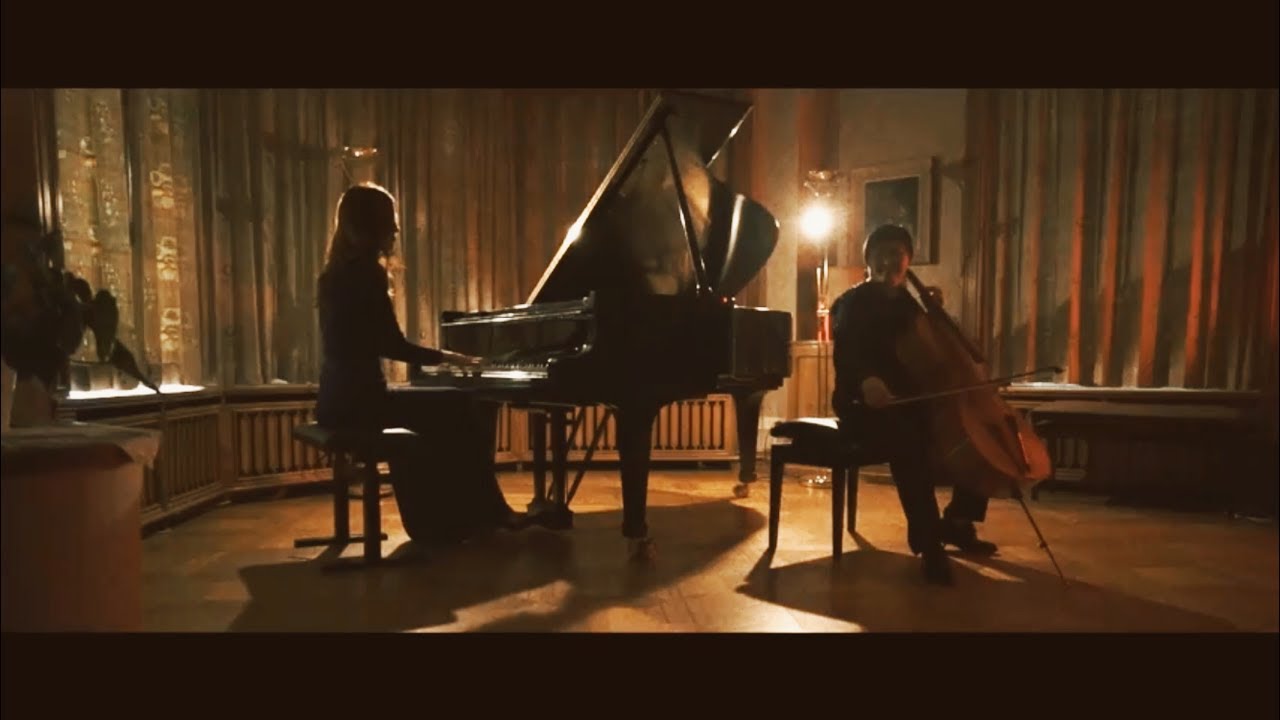
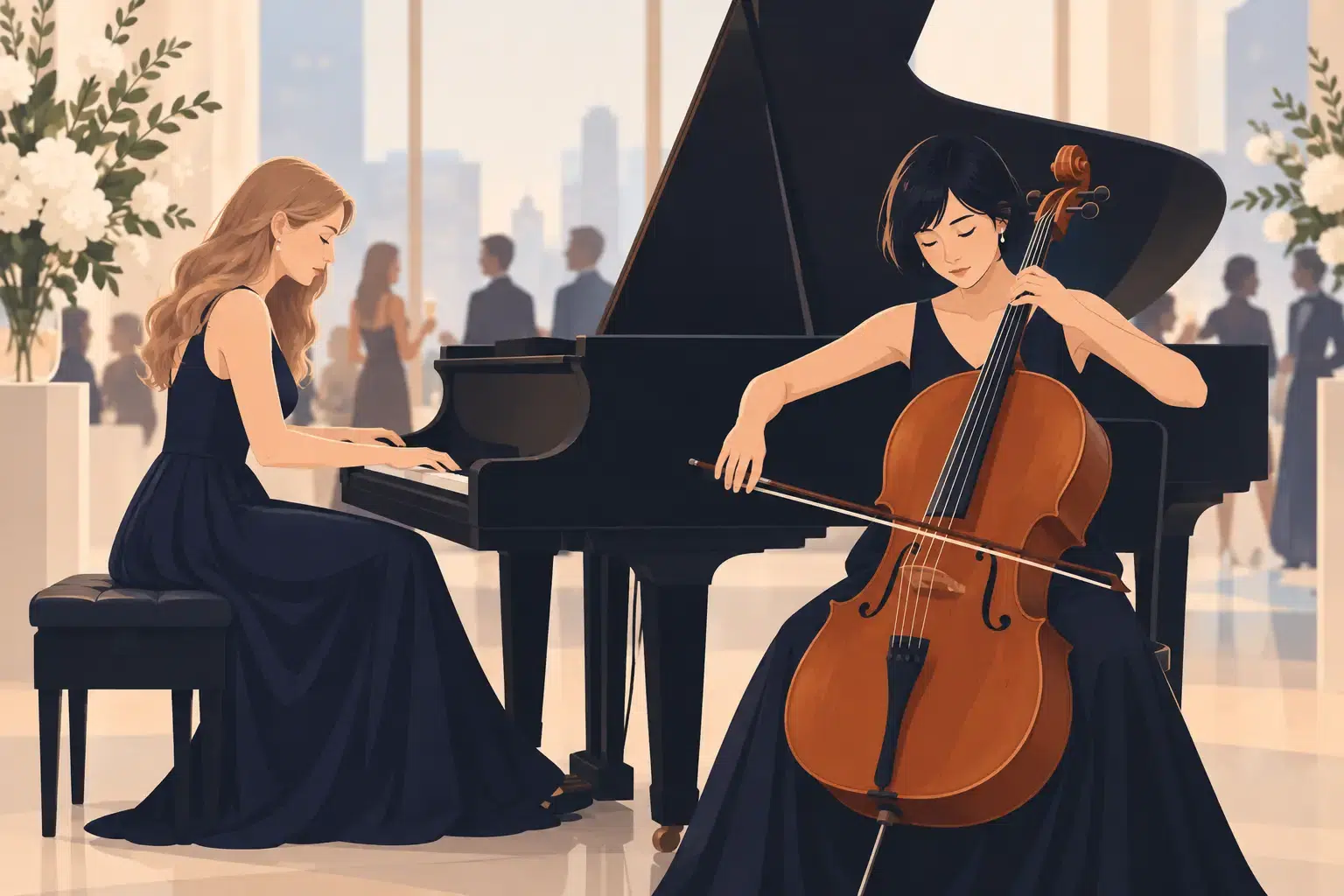
The aperitif is the calling card of the evening. Guests find their bearings, are welcomed, meet acquaintances and begin to inhabit the space. Live music gives this often busy phase an elegant centre. A piano and cello duo creates a warm, refined sound that allows closeness while clearly communicating the quality of the event.
Flowing programmes work particularly well here, combining classical lightness, bossa nova, jazz standards, film music and understated reinterpretations of well-known pop and rock songs. Familiarity creates connection; the chamber-music treatment gives it sophistication. A piece should not feel like part of a background playlist, but like part of the staging.
The positioning of the musicians also deserves attention. Directly by the entrance, music can mark a festive welcome; in large rooms, a central position that does not obstruct circulation is often more effective. In complex venues or across several guest areas, an expanded ensemble can fill the space more naturally. The choice depends on acoustics, guest numbers and the desired intensity.
Background music requires musical intelligence
Background music is not a synonym for arbitrariness. It requires particular sensitivity: volume, tempo and density need to adapt to conversation, service and room acoustics. In a historic hall with hard surfaces, even a duo can carry a long way. In a modern event venue with many guests, discreet amplification or a larger ensemble may be appropriate.
Professional musicians read the room. As the reception becomes livelier, the programme can gain a little more energy. When a speech begins or conversations intensify around the standing tables, the music recedes. This flexibility is almost impossible to achieve with a pre-produced soundtrack.
Framing the major moments with music
Galas live through moments that remain in the memory: the entrance, the welcome, the presentation of an award, a speech of thanks or the start of dinner. Music can clearly mark such transitions without making them feel artificially grand. A precisely chosen entrance piece communicates confidence. A calm melody after an emotional speech gives the audience space to let the words resonate.
This requires close coordination with the host, technical team and event management. Not every announcement needs music, and not every award calls for a dramatic sound. A musical cue that runs too long can lose tension; a piece that is too powerful can overshadow the person on stage. Good direction preserves the right balance.
Short musical signatures can be especially elegant. They might accompany the walk to the stage, end clearly before the applause and immediately return space to the presenter. A specially arranged piece — perhaps a song connected with the brand, the host or the anniversary — can also make an event unmistakably personal. What matters is that the interpretation fits the overall concept rather than feeling like a decorative extra.
Repertoire with recognition and character
A gala repertoire does not have to choose between classical music and entertainment. It is precisely the combination that opens up special possibilities. A work by Bach can create focus and dignity; an elegant film melody can bring spaciousness and glamour. Jazz and bossa nova lend lightness to the aperitif, while refined arrangements of pop or rock songs add a contemporary accent.
The selection should not simply follow the private musical tastes of individual organisers. A song that is wonderful in a personal setting may be too dominant, sentimental or stylistically unsuitable for a reception. Conversely, an overly formal programme may feel distant for a creative brand. The art lies in making the hosts‘ identity audible while still leaving enough openness for the guests.
For dinner, a varied programme makes sense so that several hours of music never feel tiring. Calmer pieces and livelier titles should alternate without creating abrupt stylistic breaks. For a short show set, the dramaturgy can be bolder: a virtuosic opening, an emotional centre and a clear festive finale often have more impact than a long sequence of equally weighted pieces.
Planning ensemble, technology and space intelligently
The classic piano-and-cello duo is ideal for many galas: it feels exclusive, requires comparatively little space and can move effortlessly from discreet reception music to a concert-style feature. For larger halls, spacious hotel lobbies or a distinctly performance-oriented evening, a trio or quartet may be the right extension. More musicians bring more tonal colours, but also require more coordination, space and budget.
An acoustic piano has a special presence, but it is not available or practical at every venue. A high-quality digital piano then provides flexibility and reliable sound control. The same principle applies to amplification: as much as necessary, as little as possible. Discreet, professionally managed technology preserves the ensemble’s natural elegance and ensures that even quiet details remain audible.
Planning should begin early, especially when a specific schedule, individual arrangements or a larger ensemble are desired. In addition to performance times, setup, soundcheck, breaks and coordination with lighting and presentation need to be considered. Clarifying these points in good time creates the effortless flow that distinguishes sophisticated events.
Live music as part of your role as host
A gala is not judged solely by whether the programme ran perfectly to schedule. Guests remember the feeling of arriving, the special atmosphere of a room and those moments when everything came together. Live music carries this feeling with an immediacy that no decorative detail can replace.
SwissDuo creates these musical spaces with classical excellence, refined arrangements and a keen sense of the dramaturgy of special occasions. Whether providing discreet accompaniment at the reception, musical accents for award moments or a concert-style highlight, the essential aim remains the same: the music should welcome your guests and make the character of your gala audible with elegance.
When the final note after an award fades through the room and applause begins a moment later, a programme item becomes a genuine memory.