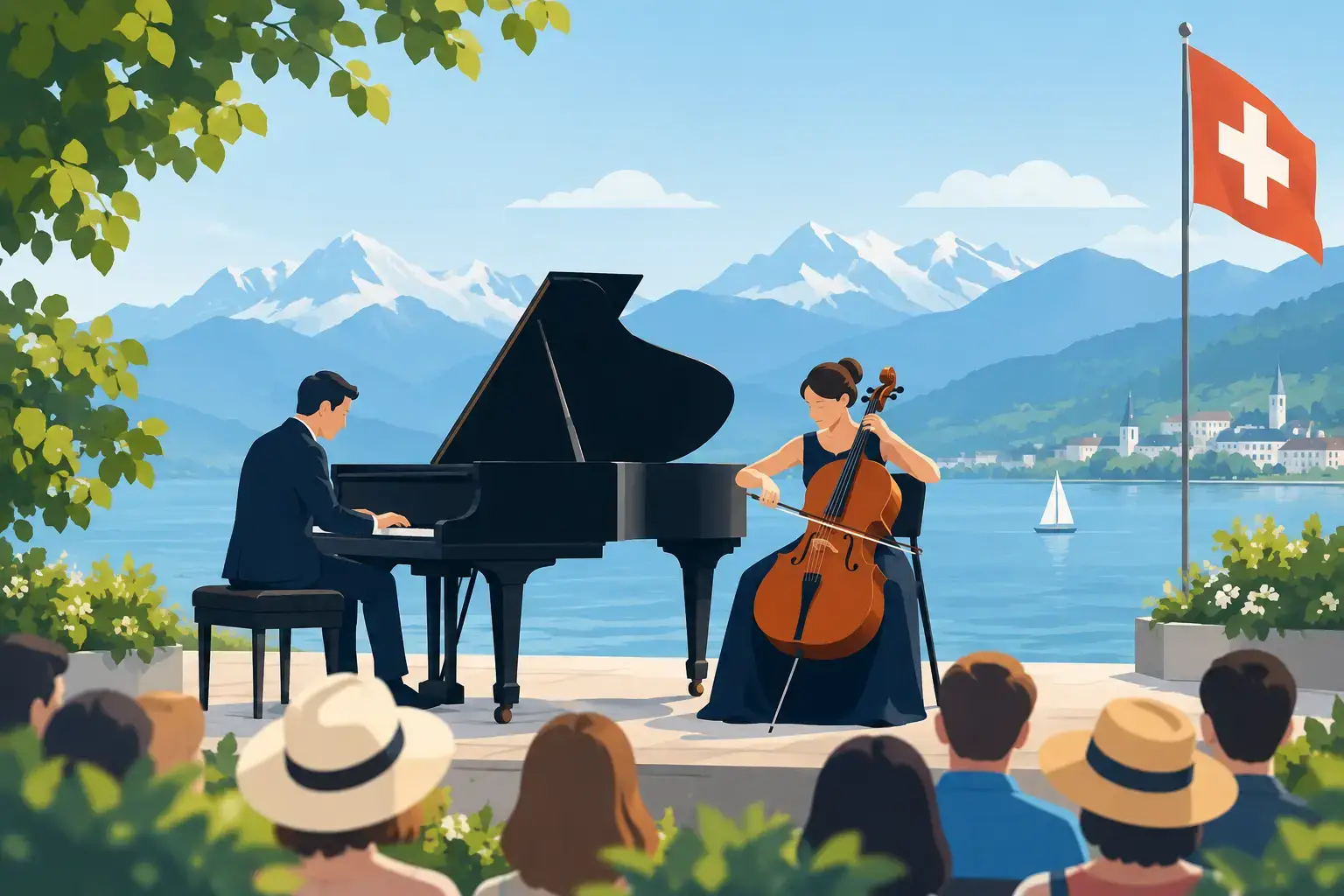
A drinks reception beneath chestnut trees, a secular wedding ceremony overlooking a lake, an elegant reception on a terrace: outdoor music gives special occasions an atmosphere that no loudspeaker can replace. But is outdoor live music allowed? In Switzerland, the honest answer is generally yes, provided the location, volume, timing and permits are appropriate for the event.
For weddings, corporate celebrations and private parties in particular, it is worth clarifying these points early. Only once the practical questions are settled can the music fulfil its real purpose: touching people, elevating the moment and giving your occasion its own distinctive character.
Is outdoor live music allowed? It depends on the location
There is no single Swiss rule treating all open-air music alike. Requirements vary between cantons and municipalities. A venue’s house rules, any conditions imposed by the property owner and local noise protection regulations also matter.
On private property, a modest musical programme for an invitation-only event is often easier to arrange than a concert open to the public. This does not mean that anything goes on a private terrace or in a garden, however. Quiet hours and the duty not to cause excessive disturbance to neighbours still apply.
In public spaces, such as a park, village square, lakeside promenade or historic old town, permission from the municipality to use the site is almost always needed. Requirements increase when a stage, seating, electricity supply, drinks service, advertising or a larger audience are involved. Contact the relevant municipal authority or venue early. A binding answer for your particular event is worth more than a general assumption.
Acoustic music or amplification: a crucial difference
Not all live music produces the same volume. An acoustic duo with piano and cello creates a refined sound for a ceremony or reception without dominating the space. Even this ensemble needs careful planning: a grand or digital piano, the cello and the guests must be positioned so that music and conversation complement each other.
Amplified bands, DJs, drums and powerful sound systems are generally assessed much more strictly by authorities and venues. Specific decibel limits, restricted performance hours, measurements or speakers directed away from residential buildings may be required. Volume is not the only issue. Low frequencies, long performances and unsuitable positioning can cause disturbance even at moderate levels.
For a stylish garden wedding or exclusive reception, restraint is often a mark of quality rather than a compromise. Finely arranged classical works, film music, jazz, bossa nova and elegant pop melodies can have a powerful effect outdoors when they respect the setting. Music can be present without drowning out conversations, speeches or the natural beauty of the location.
Consider quiet hours and neighbours
Many municipalities have midday, evening and night-time quiet hours. Exact times vary, but requirements generally become stricter later in the evening. Anyone planning to celebrate late into the night should not assume that a one-off wedding or company anniversary automatically justifies an exception.
If your event takes place on private property, inform immediate neighbours in good time. A friendly, personal announcement will not prevent every complaint, but it encourages understanding. Better still is a clear schedule: a musical welcome in the afternoon, discreet accompaniment to dinner and outdoor activities ending on time. Moving a later celebration indoors can be an elegant, conflict-free solution.
Permits: questions for your checklist
Whether you need a permit depends on the format and location. At a hired event venue, first clarify what is already covered by its permit or house rules. Some venues allow only acoustic music outside; others set fixed finishing times or require a technical inspection.
For an event you organise on public land, the municipality, police or a specialist events office is typically responsible. Depending on the occasion, traffic arrangements, a safety plan, temporary infrastructure or a hospitality permit may also be relevant. The effort involved for a small ensemble at a ceremony is naturally different from that for a publicly advertised festival.
Copyright and fees should not be overlooked either. Public or business events may need to be registered with SUISA, particularly when copyrighted works are performed. Responsibility, whether held by the organiser, venue or service provider, should be agreed in writing. This avoids unpleasant surprises after an otherwise successful event.
Planning outdoor live music with style and confidence
Start with the character of your event. Should the music accompany the entrance at a secular wedding ceremony, enhance a drinks reception or add discreet accents between dinner courses? This determines the ensemble, repertoire, duration and technical needs.
Then discuss the exact performance location with the venue. A sheltered spot with level ground is essential for instruments and musicians. Direct sunlight, rain, humidity and strong winds are problematic for fine instruments. A cello and piano are particularly sensitive to changes in the weather. A stylish pavilion, a sufficiently large tent or a covered terrace are therefore part of professional planning, not simply decoration.
Clarify the electricity supply too. An acoustic setting often requires little equipment, but a digital piano, discreet amplification for speeches or a small sound system need safe sockets nearby. Cables must not obstruct escape routes or guests’ movement. At remote locations, a quiet generator may be an option, but only if it fits the refined setting both visually and acoustically.
Always have a weather backup plan. Do not wait until just before the start to decide where the music will move in rain or wind. The indoor space should offer enough room and work musically. For a ceremony in particular, moving to an orangery, a hall or a light-filled tent can make the moment even more intimate.
Choose the right ensemble for the occasion
A piano and cello duo is particularly suited to emotional ceremonies, elegant receptions and festive dinners. The sound is rich without being intrusive. For larger groups or expansive spaces, a trio or quartet can fill the musical space more fully without necessarily increasing the volume.
The key is not the largest possible ensemble, but the right musical flow. Light jazz or bossa nova may welcome guests as they arrive, while a personal favourite melody accompanies the entrance. For a corporate reception, film music, classical highlights and stylish pop arrangements can bring an international audience together.
A professional ensemble plans these transitions with you, coordinates with celebrants, wedding planners or event managers and reliably respects the agreed time slots. SwissDuo PianoCello shapes these moments with first-class musical precision and a repertoire that adapts to the occasion, rather than the other way around.
When an outdoor performance is better moved indoors
Not every beautiful location is a good setting for music. If the terrace is directly beside homes, the area lacks shelter or the venue imposes very strict quiet hours, a short, purely acoustic performance may make sense. The duo might accompany only the ceremony and the first part of the drinks reception, with dinner taking place later in the hall.
This preserves the special magic of the outdoor setting while respecting its surroundings. Professional event planning is not about forcing every idea through at any cost. It is about finding the right setting for the music, guests and location.
When you bring permits, weather, timing and the musical concept together early, a lovely outdoor idea becomes an occasion that resonates long afterwards, for you and your guests.