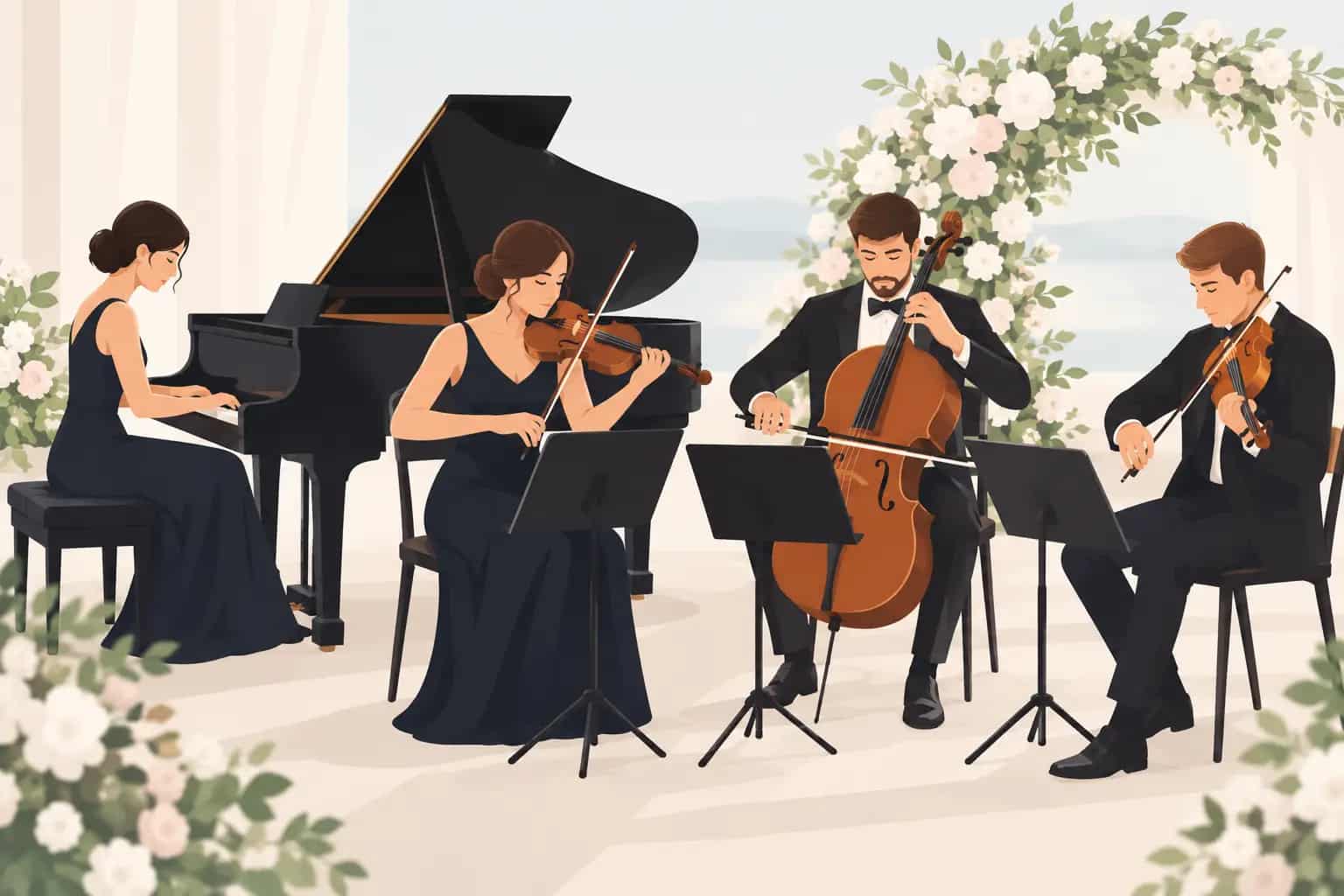
When the first notes accompany the entrance to a wedding ceremony, music becomes part of a lasting memory. Choosing a trio or quartet for your wedding is therefore about more than the number of musicians. The most important questions are how the music will sound in your venue, what atmosphere you would like to create and which moments you want to highlight.
A skilled ensemble brings presence without overpowering the celebration. A trio often offers an intimate, transparent sound, while a quartet can add richness and a particularly festive character. Both can be deeply moving when the repertoire, arrangements and musicians suit the occasion.
Trio or quartet for a wedding: the atmosphere comes first
Couples often ask whether three musicians will be enough, or whether four would be better. The answer depends on the venue and the programme. A larger ensemble is not automatically more impressive: expressive playing, thoughtful arrangements and experience with wedding ceremonies matter just as much.
A trio of piano, cello and violin, for example, creates a warm and versatile musical palette. The piano provides harmony and rhythmic energy, the cello adds depth, and the violin can carry a luminous, singing melody. This combination works beautifully for classical pieces, film themes, pop ballads and tasteful jazz arrangements.
A quartet offers an additional instrumental voice, allowing for denser harmonies and broader contrasts. A traditional string quartet comprises two violins, viola and cello; a piano quartet is a different ensemble. The best choice depends on the sound you prefer and the repertoire you would like to hear.
When a trio is particularly well suited to a wedding
A trio is often ideal for an intimate celebration: a small chapel, a boutique hotel, an elegant townhouse or an outdoor wedding ceremony in a garden. Its sound can feel close and personal while leaving space for vows, conversation and quiet emotional moments.
It is also a refined choice for an apéritif or reception. Guests can enjoy familiar melodies without feeling that every piece requires their full attention. An arrangement of classical music, bossa nova, jazz, pop and film music brings variety while maintaining an elegant atmosphere.
If you would like music for several parts of the day, a trio is practical as well as expressive. It needs relatively little space and can often move from the ceremony to the reception with less logistical complexity. This flexibility is particularly useful when different parts of the celebration take place in separate rooms or locations.
The beauty of a transparent sound
The strength of a trio lies in clarity rather than compromise. Each instrumental line can be heard distinctly. During the processional, the cello might offer a gentle foundation while the violin shapes the melody. During the exchange of rings or signing of the register, the musicians can play with restraint without losing emotional impact.
Couples who prefer a modern, light or romantic atmosphere often appreciate this sound, especially when a favourite song is performed in an elegant acoustic arrangement.
When a quartet may be the better choice
A quartet can be particularly effective in larger spaces, historic churches, grand villas and ballrooms, or at receptions with many guests. Its richer texture allows the musicians to create greater contrast between intimate passages and more ceremonial moments.
For a wedding ceremony, a string quartet can lend the entrance a timeless elegance and give the recessional a celebratory lift. If you prefer piano as part of a four-piece ensemble, the instruments and arrangements should be planned accordingly: a piano quartet is not the same instrumentation as a string quartet.
A quartet also works well for larger receptions. The additional voice can help the music retain its colour and presence in a busy room or an outdoor setting, without simply increasing the volume.
A wider range of musical expression
With four musicians, arrangements can develop fuller harmonies, smoother transitions and more varied textures. A gentle ballad can give way to a memorable film theme with a more expansive, concert-like sound.
This is especially appealing when live music is intended to become a focal point of the celebration: perhaps for the entrance to dinner, a special moment after the speeches or a short concert interlude.
Consider your venue, guest numbers and wedding schedule
The ideal ensemble depends on your surroundings. A garden celebration for a small group calls for a different approach from a reception for 150 guests in a high-ceilinged hall. Materials, room size and reverberation all influence how instruments carry.
In a church with a long acoustic decay, musicians must allow notes space to resonate. Outdoors, wind, background noise and the distance between performers and guests also matter. A professional ensemble considers these conditions before recommending a formation and any necessary amplification.
Think about the full schedule, too. If you need music only for the ceremony, a trio may be entirely sufficient. For a ceremony, apéritif, dinner entrance and several featured performances, a quartet may offer greater sonic variety. Neither decision should be made on ensemble size alone.
Repertoire: music that tells your story
Even the most accomplished ensemble needs a repertoire that reflects you. Which piece should accompany the processional? What would you like to hear as you leave the ceremony together? Should the reception feel romantic, relaxed, cinematic, jazzy or a little of everything?
Professional arrangements make these choices possible. A favourite pop song may feel beautifully intimate with three musicians, while a quartet can give the same melody a broader musical arc. What matters is that the arrangement respects both the song and the ensemble.
At SwissDuo, we approach every musical concept through the character of the venue, the wedding schedule and the couple’s personal wishes. Classical training, carefully chosen pieces and original arrangements help create music that feels distinctive without becoming intrusive.
Choosing well never means settling for less
Choose a trio if you value closeness, clarity and a finely balanced sound. Consider a quartet if you want a fuller musical texture, greater dynamic range and a particularly ceremonial presence. Either can be the right choice when it suits the scale and spirit of your celebration.
Years later, guests are unlikely to remember exactly how many musicians performed. They will remember the first entrance, the vows, the laughter over drinks and the moment when the music felt perfectly suited to the occasion.