The moment before the processional, the first words of a speech, the moment of farewell: It is precisely then that music does not decide on volume, but about effect. A premium ensemble for ceremonies creates a framework that carries feelings without putting themselves in the foreground. It gives comfort to a wedding ceremony, a baptism of warmth, a funeral service and a festive reception that natural elegance that guests feel immediately.
For demanding occasions in Switzerland, it is not enough to simply choose beautiful pieces. The quality of the interpretation, the feeling for the process and the ability to tailor the music to people, space and occasion are decisive. Piano and cello are a particularly expressive cast: clear and noble in sound, flexible in the repertoire and close enough to the action to personally accompany every important moment.
What distinguishes a premium ensemble for ceremonies
In ceremonial music, premium not only means a larger repertoire or elegant wardrobe. Above all, it means musical security in a moment that cannot be repeated. Professional musicians read the room, react to delays and adjust speed, dynamics and transitions with a calm, self-evidence.
In a wedding, the processional can take a few seconds longer than planned because a child stops or the bridal couple deliberately takes their time. In a secular ceremony, the process shifts because a speech is particularly touching. When saying goodbye, after a speech, there is a silence that should not be ignored. A first-class ensemble does not fill such moments mechanically, but musically in a meaningful way.
Added to this is the artistic class. The cello brings deep, warmth and a human-looking voice to the sound. The piano provides support, color and width. Together, both instruments can make a classic Ave Maria just as convincing as a reserved pop ballad, film music or a well-known melody that has a personal story for a couple or a family.
The right music for the character of your ceremony
There is no universal ideal music for a ceremony. A civil wedding in Zurich often calls for a different tonal language than a secular ceremony in a garden, a church wedding or a reception in a historic hotel. The selection should not only be made, but should credibly reflect the style of the occasion.
Classic and solemn
Classical works create order, dignity and timeless beauty. They fit particularly well church weddings, baptisms, blessings and official moments. But classical does not have to appear distant: with a finely chosen interpretation, an atmosphere is created that is festive and at the same time remains personal.
Personal and modern
Many couples want a song that connects them. A sensitive arrangement for piano and cello gives pop, rock, jazz or film music a new noblesse. The melody remains recognizable, but looks more stylish and solemn than in the original. This can be a touching choice, especially for the processional, the exchange of vows or the recessional.
Subtle and elegant in the background
Not every musical accompaniment needs a clear stage moment. During an aperitif, a reception or a dinner, a duo provides a cultivated soundscape that does not overlap conversations. Bossa Nova, Jazz, Chillout, classic miniatures and selected evergreens create lightness without sounding arbitrarily.
The process: fewer pieces, better set
A ceremony does not win by playing as many pieces of music as possible. Often three to five carefully placed moments are enough to shape the entire process. The decisive factor is where music begins, how it ends and what can follow afterwards.
At a wedding, the entry, a moment during the ceremony, for example after the ring exchange or a reading, the recessional and possibly the transition to the aperitif are particularly effective. During a baptism, the music can accompany the reception of the family, a quiet moment during the blessing and the joint toast. At a funeral service If she carries her entry, she creates space according to personal words and accompanies the farewell with a quiet presence.
An experienced ensemble helps to shape the musical arc not according to rigid rules, but according to the actual process. This also protects against a common mistake: to put too many very emotional pieces in a row. Contrast creates depth. A brighter, hopeful melody can be followed on an intimate, calm work.
Duo, trio or quartet: Which cast fits?
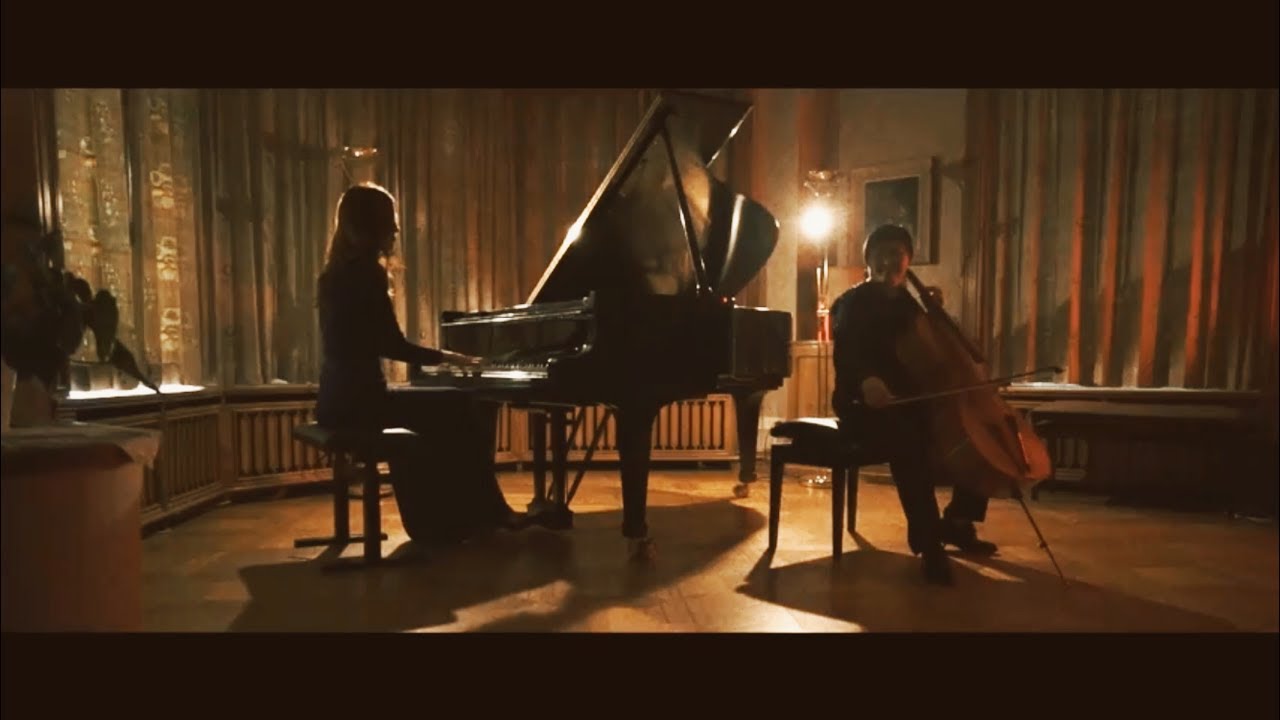
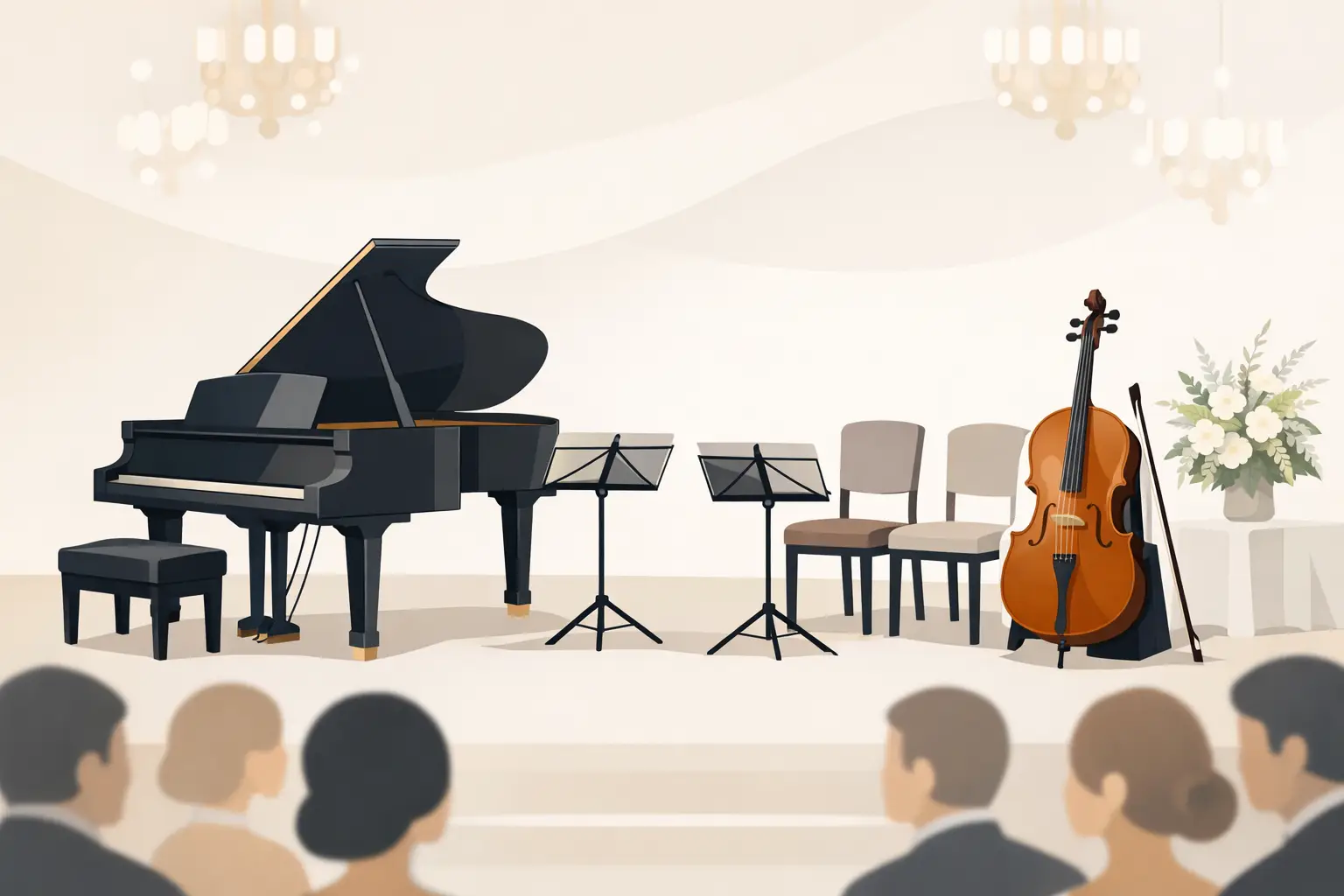
The duo of piano and cello is the most elegant solution for many ceremonies. It offers a full, balanced sound, requires comparatively little space and can be used just as convincingly in modern event locations as in churches, private houses or outdoors.
A trio or quartet can be useful if the room is large, a larger number of guests is expected or the event has a more concerted character. Additional strings expand the sound image and create more orchestral width. However, a larger formation can also seem too present for an intimate wedding with thirty guests. Here the duo is often the finer choice.
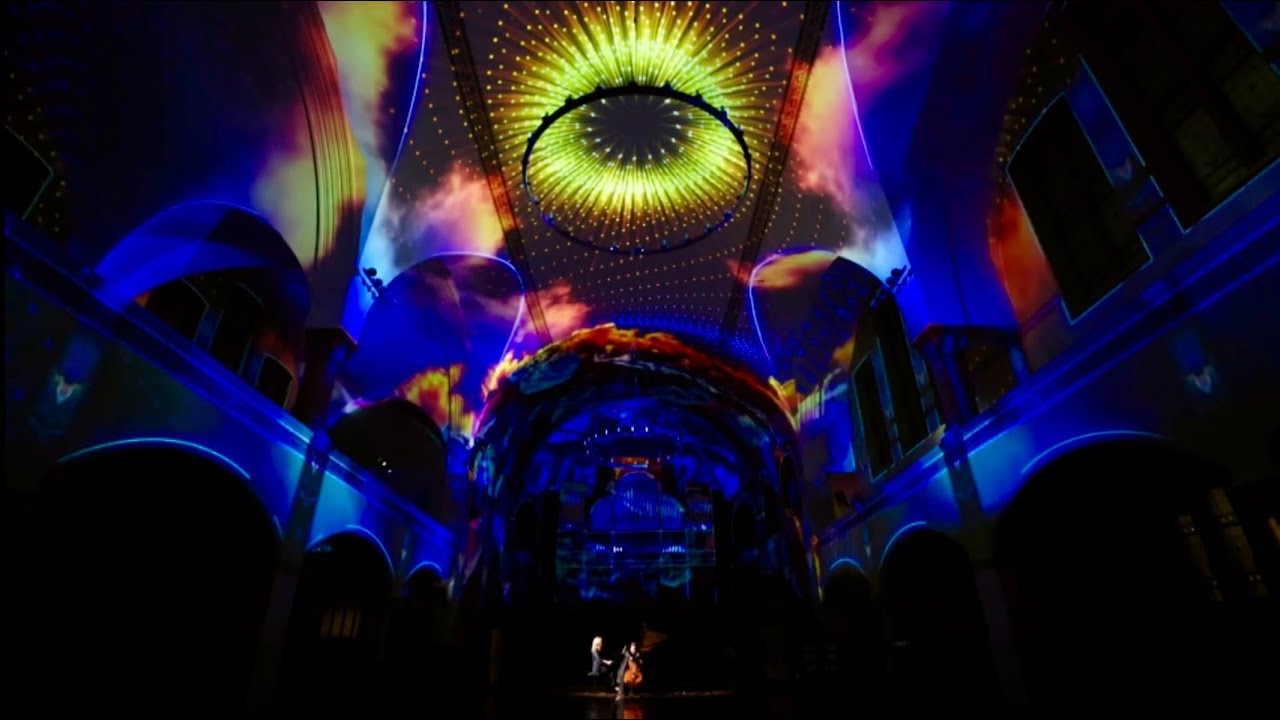
Not only the number of guests counts. Acoustics, room height, seating and the location of the ceremony also influence the decision. In a small band, music is different than on an open terrace by the lake. In an outdoor ceremony, the weather, power supply and a protected location for the instruments must also be clarified at an early stage. Professional planning is evident in these details.
What to look out for when booking
Live music for a ceremony is a matter of trust. Ask not only about possible songs, but also how the musicians accompany the process. Good advice can be recognized by the fact that she asks specific questions: Where does the ceremony take place? How many guests are expected? Is there a fixed schedule? What music has personal meaning? Is there a piano on site or is a high-quality electric piano required?
Also make sure you have a stylish appearance appropriate to the occasion, clear communication and experience with different forms of ceremony. An ensemble should not only play excellently, but also arrive reliably, build up discreetly and coordinate professionally with wedding speakers, wedding planners, locations or the church.
Swissduo Pianocello combines classic training at the highest level with Tailored Arrangements And a repertoire that ranges from classical music to pop, jazz, film music and bossa nova. This creates no standardized accompaniment, but a musical design that leaves the occasion with its own character.
Music that stays after the ceremony
People rarely remember every single announcement of a holiday. However, you remember the mood when the door opened, the sound during a promise or the melody that gently accompanied a farewell. This is exactly where the value of a premium ensemble for ceremonies lies: it doesn’t make the moment louder, but more meaningful.
So don’t just choose a piece you like, but also musicians to whom you would like to confide in this moment. When sound, occasion and personality come together, a ceremony becomes a memory with your own music.