When the first notes sound, the atmosphere of a ceremony is often determined in just a few seconds. That’s precisely why emotional love songs for ceremonies are far more than just beautiful background music. They lend weight to the entrance, make glances linger, and create that subtle tension between joy, emotion, and festive tranquility that truly makes a special moment unforgettable.
Why emotional love songs are so effective for ceremonies
A ceremony thrives not on volume, but on meaning. Music plays a quiet, central role. It connects people without needing to be explained. A single song can tell a shared story, evoke a memory, or lend a vow that depth which words alone often cannot achieve.
Love songs work particularly well in ceremonies because they are directly accessible on an emotional level. This applies to weddings, secular ceremoniesBlessings and also for festive anniversaries. However, what’s crucial is not just the title itself, but the manner of performance. A song that sounds radio-friendly and lavishly produced in its original version can suddenly appear much more intimate, stylish, and touching in an arrangement for piano and cello.
For sophisticated occasions, this is precisely the difference. Not every well-known love song is automatically suitable for an elegant setting. Only the right interpretation transforms a popular song into true ceremonial music.
Which songs are really suitable?
The best selection rarely comes from rankings or rigid playlists. Far more important is the question of what the song evokes in the room. Does it feel warm and expansive? Personal and refined? Festive enough for the occasion? Or does it bring too much pop energy where calm, class, and focus are actually needed?
Emotional love songs for ceremonies work particularly well when they combine three qualities: familiarity, musical elegance, and a clear emotional arc. A song can be well-known, but shouldn’t be so dominant that the lyrics or associations overshadow the moment. At the same time, it needs melodies that also hold up instrumentally. Because it’s precisely in high-quality live arrangements that a song’s true substance becomes apparent.
Typical favorites come from pop ballads, film scores, and select classical crossover pieces. Titles like «A Thousand Years,» «Perfect,» «Can’t Help Falling in Love,» or «All of Me» are often requested because they immediately resonate emotionally. But here, too, the arrangement is crucial. A tasteful duo of piano and cello brings warmth, depth, and stylistic restraint—without diminishing the song’s impact.
The right song for the right moment
A ceremony usually consists of several musical segments. Choosing only one favorite song often means missing out on potential. The flow of the ceremony becomes much more harmonious when each phase has its own distinct character.
processional
The processional It needs presence, but not harshness. The music can sound grand, but shouldn’t be intrusive. Long, drawn-out melodies with a clear emotional arc are particularly well-suited here. Love songs with a calm pulse and a celebratory structure are ideal because they allow space for footsteps, glances, and that big first impression.
Ring exchange or central ceremonial moment
In this section, the focus is on intimacy. Here, stripped-down, intimate songs are often more powerful than grand anthems. A delicate cello melody or a very clear piano theme can be more moving than a song with excessive pathos. Less is often more in this context.
abstract
During the recessional, the music can be brighter, more joyful, and somewhat more open. The emotional intensity remains, but gains a lighter feel. Songs with a warm, optimistic character are particularly suitable here. The overall feeling shouldn’t sound like a show, but rather like liberation, happiness, and festive movement.
Played live or from a recording?
For many hosts, it’s primarily a question of budget. However, for the impact of the moment, it’s also a question of quality. Recorded music is predictable and uncomplicated.. Live music, on the other hand It reacts to the space, the acoustics, and the actual course of the ceremony.
That’s precisely where its strength lies. An entrance doesn’t always take exactly the same amount of time. A glance, a smile, a moment of pause – all of that can be captured musically in a live setting. The result feels more natural, more sophisticated, and significantly more personal. This difference is immediately apparent, especially with emotional love songs. A live arrangement breathes with the occasion.
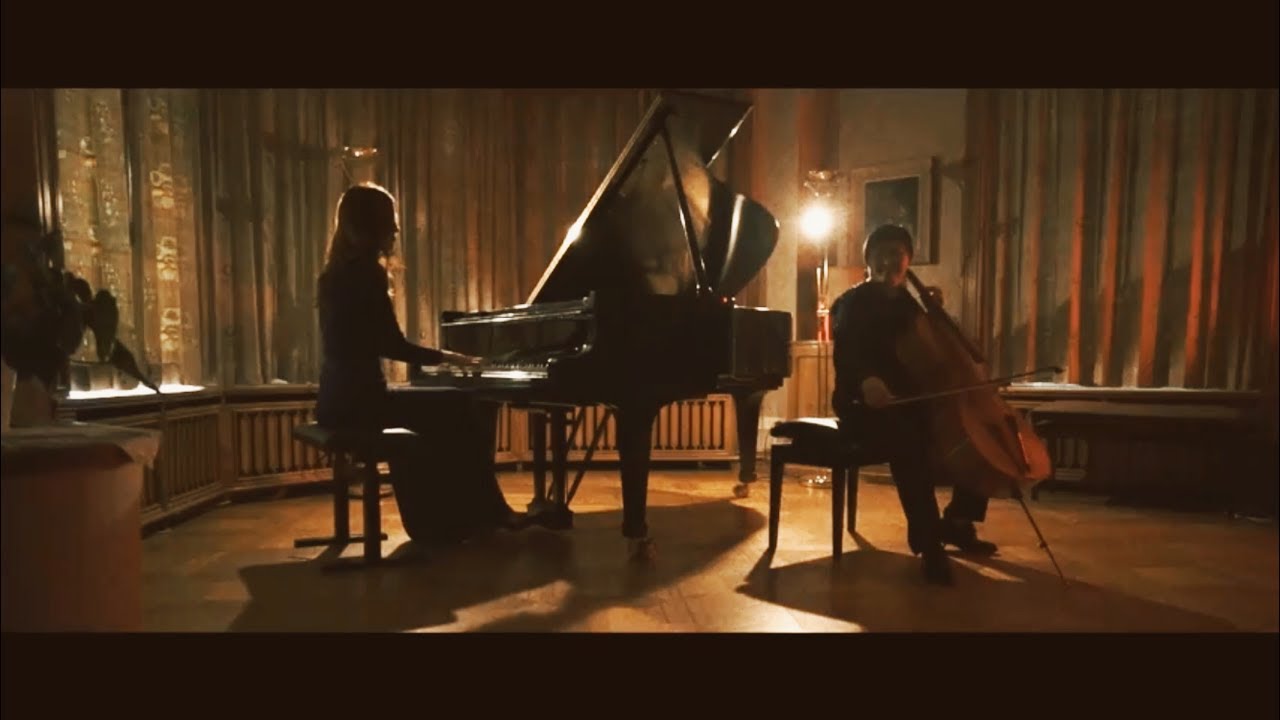
A duo of piano and cello offers an exceptionally elegant sound. The piano provides structure and harmony, while the cello brings warmth, depth, and an almost human voice to the music. This combination sounds refined, solemn, and yet approachable – ideal for stylish ceremonies.
Something that is often underestimated when choosing a song
Many couples and families choose their music based on the lyrics first. This is understandable, as words carry personal meaning. However, in the ceremony itself, the lyrics aren’t always the most important factor. Often, the melody has a greater impact on the atmosphere than the song’s actual message.
Tempo is also often misjudged. A song can be emotional and yet still seem too short, too restless, or lacking in poignancy for the entrance. Conversely, a very well-known track in a slow, instrumental version can suddenly unfold precisely the desired dignity.
Another important point is the balance between personal taste and a stylish overall impression. Of course, the music can be individual. But a ceremony isn’t a private moment for two. It’s a shared experience with guests, the space, the flow of events, and often with photos and videos. Therefore, it’s worthwhile to choose songs not just based on personal preference, but also on their impact within the context.
How many songs are reasonable?
For most ceremonies, three to five carefully chosen pieces are perfectly sufficient. More music doesn’t automatically mean a greater impact. Often, the most powerful atmosphere arises precisely when individual pieces are deliberately selected and space is left between them.
Those who also opt for musical accompaniment during the aperitif or reception can continue the emotional concept. The ceremony then doesn’t begin abruptly and end immediately in a different style. Instead, a musical arc is created that supports the occasion as a whole. This is precisely what defines high-quality event music: it doesn’t just accompany program elements, but shapes the atmosphere.
Popular styles with class
Not every ceremony calls for the same sound. Some couples desire a strong romantic feel, others modern elegance, or a subtle film score atmosphere. Currently, finely arranged pop ballads are particularly popular because they are familiar and emotional without sounding stiff. Selected songs from films and musicals also work well, provided they are not too dramatic.
Classical pieces remain a safe choice, especially when combined with modern love songs. This mix often sounds particularly sophisticated because it blends personality and tradition. This is precisely where the skill of professional musicians shines: they can curate repertoire in such a way that transitions remain seamless and no stylistic clash occurs.
SwissDuo PianoCello lives up to this very standard – with first-class arrangements, fine-tuning to the occasion and a performance that combines emotion with elegance.
This is how you make a really good decision
The best song list isn’t created under pressure. It’s helpful to first define the character of the ceremony. Should it be quiet and intimate, classically solemn, modern and romantic, or bright and relaxed? Only then does it make sense to select specific songs.
It’s also helpful to ask yourself at what moment you want to get goosebumps. That’s exactly where your most powerful song belongs. Not every track has to be a highlight. A musical flow also needs moments of respite so that the big moments can have their full impact.
If you’re unsure, professional advice is worthwhile. There’s often more to a beautiful song than meets the eye, and more to it than meets the eye. Key, tempo, length, instrumentation, and transitions all play a role in determining whether music simply sounds pleasant or truly moves the listener.
Ultimately, it’s never just about musical taste. It’s about atmosphere, presence, and how you and your guests want this one moment to feel. When emotional love songs are carefully chosen for the ceremony and stylishly performed live, exactly what you can’t plan yet immediately sense is created: genuine depth, subtle elegance, and a moment that will last.