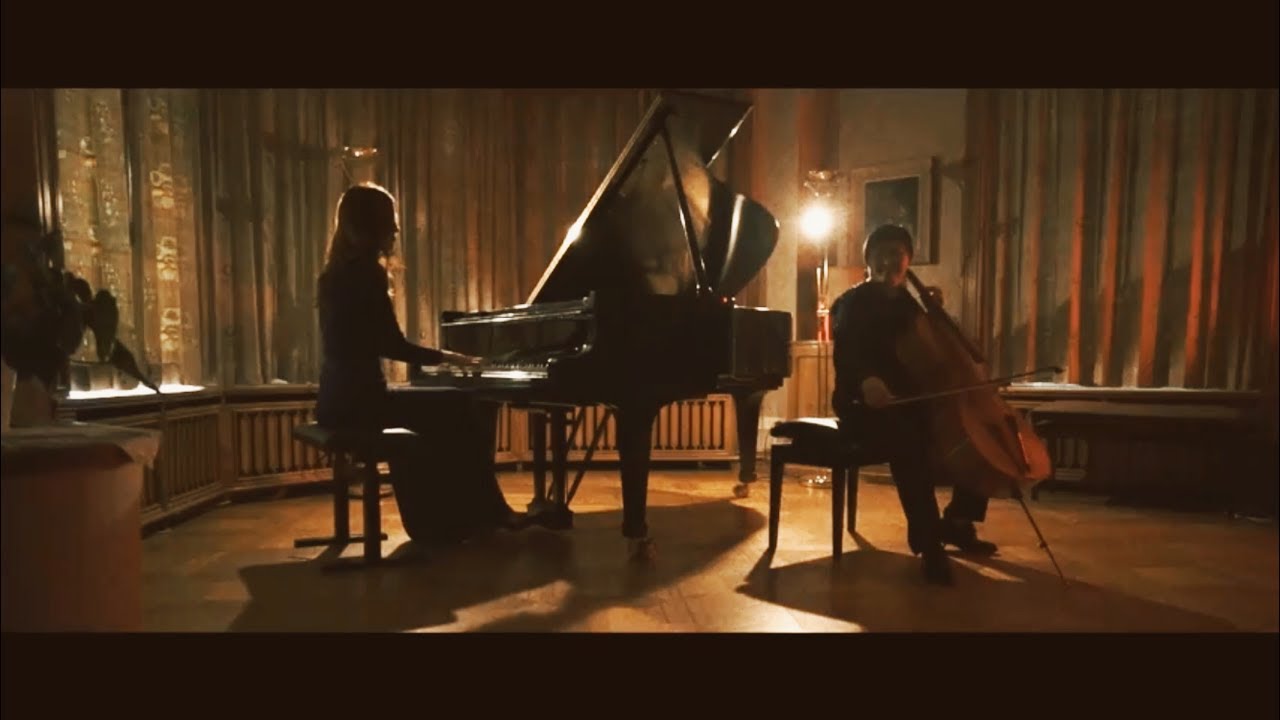
Whoever is planning a funeral will find themselves having to make emotionally weighty decisions in a very short time. When it comes to music, what makes the difference quickly becomes clear: live funeral music creates a moment that does not merely accompany but carries. It gives space to words, connects memory with the present, and lends a ceremony that quiet dignity which turns a farewell into a genuine, personal moment.
Why live funeral music can have such a powerful effect
At a funeral, music is never just another item on the programme. It shapes the mood, tempo, and depth of the entire ceremony. A piece played live breathes with the room, with the speaker’s voice, and with the silence of those present. That is precisely where its special power lies.
Unlike a recording, live music feels more immediate and more human. A cello can make warmth and comfort tangible; a piano can bestow calm and a sense of spaciousness. Together, they create a soundscape that does not impose but accompanies – refined, cultivated, and deeply expressive. Especially in churches, funeral halls, or small private spaces, this presence is often experienced as comforting and very personal.
Many bereaved families want to honour a loved one’s life without overwhelming the ceremony. This is precisely where live music offers an elegant solution. It feels high-quality, emotional, and tasteful without being loud. It can be classically solemn, simply modern, or gently hopeful – depending on what suits the person and the occasion.
What music is suitable for a funeral?
Choosing the right music for a funeral is rarely a purely musical question. What matters far more is the atmosphere you wish to create. Are you planning a traditional church setting, a small private ceremony, or a farewell that consciously focuses on the life that was lived? The answer determines whether a classical piece, a finely arranged pop ballad, or a film melody is the right choice.
Many families want pieces they know and can place emotionally. That is understandable. Familiar melodies provide support. At the same time, it is worth paying attention to a high-quality musical arrangement. A well-known song, tastefully arranged for piano and cello, can feel far more dignified and moving than an original recording played through a speaker.
Classical works remain popular at funerals because they bring calm, depth, and solemnity. However, pieces from pop, jazz, or film music can also be very fitting if they are chosen with taste and interpreted sensitively. It depends on the person you are saying goodbye to. For one personality, a Bach chorale might be just right; for another, a quiet chanson, a gentle ballad, or a song that has been part of family life for years.
Between tradition and personal memory
Not every funeral requires the same musical framework. Some families consciously want traditional pieces because they offer security and form. Others want to strike a more personal tone. Both are right, as long as they are done with sensitivity.
A good musical framework emerges where style and personality come together. When a piece of music evokes memories while preserving the ceremonial character, it often creates precisely that moment which words alone cannot reach.
When live music makes particular sense
Not every funeral is large. But smaller ceremonies in particular benefit greatly from live music. In an intimate setting, every nuance stands out. A live melody can feel softer, warmer, and more real there than any technical solution.
Live music is also often the better choice when the service includes several speeches or rituals. Musicians can react flexibly to the moment, shape transitions, and fill pauses. This gives the ceremony a sense of calm. Nothing feels abrupt, nothing mechanical. Instead, a natural flow emerges that provides support for the bereaved.
In church funerals, acoustics and atmosphere play a major role. Strings and piano unfold a special elegance in such spaces. In modern farewell rooms or private ceremonies, a smaller ensemble can be equally convincing – often even more direct.
Planning live funeral music – what matters
When choosing music for a funeral, you should not only think about favourite songs but also about the overall arc of the ceremony. Where does the music fit? During the entrance, between speeches, during a candle ceremony, or at the farewell at the end? Each placement has a different effect.
The beginning usually calls for a sense of gathering and dignity. Music in the middle of the ceremony may carry comfort, memory, or quiet hope. The final piece remains especially strong in memory. It accompanies the last shared moment and should therefore be chosen with great care.
Equally important is the instrumentation. A piano and cello duo feels elegant, balanced, and emotionally nuanced. It is present but never dominant. For some funerals, a reduced line-up works best; for others, a larger ensemble can create more sonic depth. It depends on the size of the room, the flow of the service, and the desired atmosphere.
What helps bereaved families when making a choice
In practice, a clear, curated selection is more helpful than endless options. Many people organise a funeral under great pressure and without musical expertise. They do not want to compare hundreds of tracks – they want reliable recommendations that are tasteful and fitting.
That is why professional guidance is so valuable. It translates wishes into a musical framework that works – emotionally, logistically, and acoustically. Often, just a few details about the deceased’s character, the venue, and the desired atmosphere are enough to develop a very coherent concept.
The difference between beautiful music and fitting music
A melody can be wonderful and still not suit a funeral. This shows how important experience is. At farewell ceremonies, what counts is not just what one likes, but how it sounds in the space, how it affects the mourners, and whether it does justice to the occasion.
Fitting music never takes itself too seriously. It supports, rather than stepping into the foreground. It creates dignity without creating distance. And it allows emotion without tipping into sentimentality. This very balance is what makes high-quality live music so special at a funeral.
A professional ensemble also pays attention to details that are often underestimated: the correct length of a piece, the volume in the room, the seamless transition between speech and music, the tempo for the entrance or exit. For the bereaved, this is a tangible relief – because the musical part not only sounds beautiful but reliably carries the service.
For which types of farewell is live music suitable?
Live funeral music is not only suitable for traditional church services. It also fits secular ceremonies, private memorials, urn burials, or quiet goodbyes in a small circle. What matters is less the size of the occasion than the question of whether the atmosphere is to be consciously shaped.
At very large services, the music may be more representative, with clear musical accents and a richer spatial sound. At small, personal farewells, restraint is often the better choice. There, a single instrument can sometimes be more moving than a large setup. So there is no fixed rule – but the right solution for each particular setting.
Especially in more refined circles, many families want a form of farewell that is tasteful, dignified, and finely tuned. Here, music becomes part of an overall picture. It underscores the character of the ceremony and demonstrates respect – for the deceased person and for the guests who share this moment.
Style, reliability, and sensitivity
At a funeral, musical quality alone is not enough; attitude matters too. Punctuality, appropriate demeanour, calm communication, and sensitive conduct on site are just as important as the repertoire. In this situation, bereaved families need no additional coordination burden – they need certainty.
That is why a professional ensemble thinks beyond the first note. It considers the service’s schedule with speakers, the church, the funeral director or celebrant, coordinates cues precisely, and yet remains flexible if a moment unfolds differently than planned. Especially at emotional occasions, this blend of excellence and composure is crucial.
When you choose a high-quality musical framework, you ultimately choose more than beautiful sounds. It is about dignity, presence, and that rare form of elegance which means the most in quiet moments. SwissDuo PianoCello designs such farewells with first-class live music, great sensitivity, and a repertoire that combines classical depth with personal warmth.
When music at the end is not merely heard but felt, it often remains in memory as the quietest and strongest part of the farewell.